
Why Does Buying a Home in Greenville, South Carolina Suddenly Feel Like So Much Responsibility?
At First Glance
A lot of first-time buyers in Greenville, South Carolina expect the home-buying process to feel exciting.
And honestly, it usually does at first.
People start imagining:
* decorating
* moving in
* future routines
* hosting friends
* finally having their own space
But at some point during the process, something emotional often shifts.
The excitement suddenly starts feeling heavier.
Buyers begin realizing:
“This is a really big decision.”
And honestly, that emotional reaction makes sense.
Because for many first-time buyers, purchasing a home is not just about buying property.
It’s about:
* financial responsibility
* long-term stability
* protecting their future
* making smart decisions
* creating a safe environment
* avoiding regret
That emotional pressure can become overwhelming much faster than many buyers expect.
Why This Matters
One thing many first-time buyers begin noticing is that the emotional weight of homeownership often grows as the process becomes more real.
Especially while touring:
* newer homes
* builder communities
* semi-custom homes
* open-concept layouts
* upgraded model homes
At first, buyers are usually focused on:
* pricing
* layouts
* bedrooms
* design finishes
* incentives
But eventually the emotional side starts showing up.
People begin wondering:
* “What if we make the wrong decision?”
* “What if we overlook something important?”
* “What if we spend too much?”
* “How do we know this is the right home?”
* “Can we realistically handle all of this?”
And honestly, those concerns are very normal.
Buying a home is one of the biggest financial and emotional decisions many people will ever make.
Especially for first-time buyers navigating:
* contracts
* inspections
* financing
* builder upgrades
* timelines
* long-term budgeting
* future planning
Many newer Greenville communities are intentionally designed to feel emotionally comfortable and functional.
Builders now often prioritize:
* flexible layouts
* natural lighting
* open kitchens
* storage
* outdoor living
* practical everyday functionality
But even in beautiful homes, buyers can still feel mentally overloaded trying to make the “right” decision.
Because emotionally, many people are not just evaluating a house.
They’re evaluating:
* their future
* their stability
* their ability to manage responsibility long-term
A Real Moment During the Buying Process
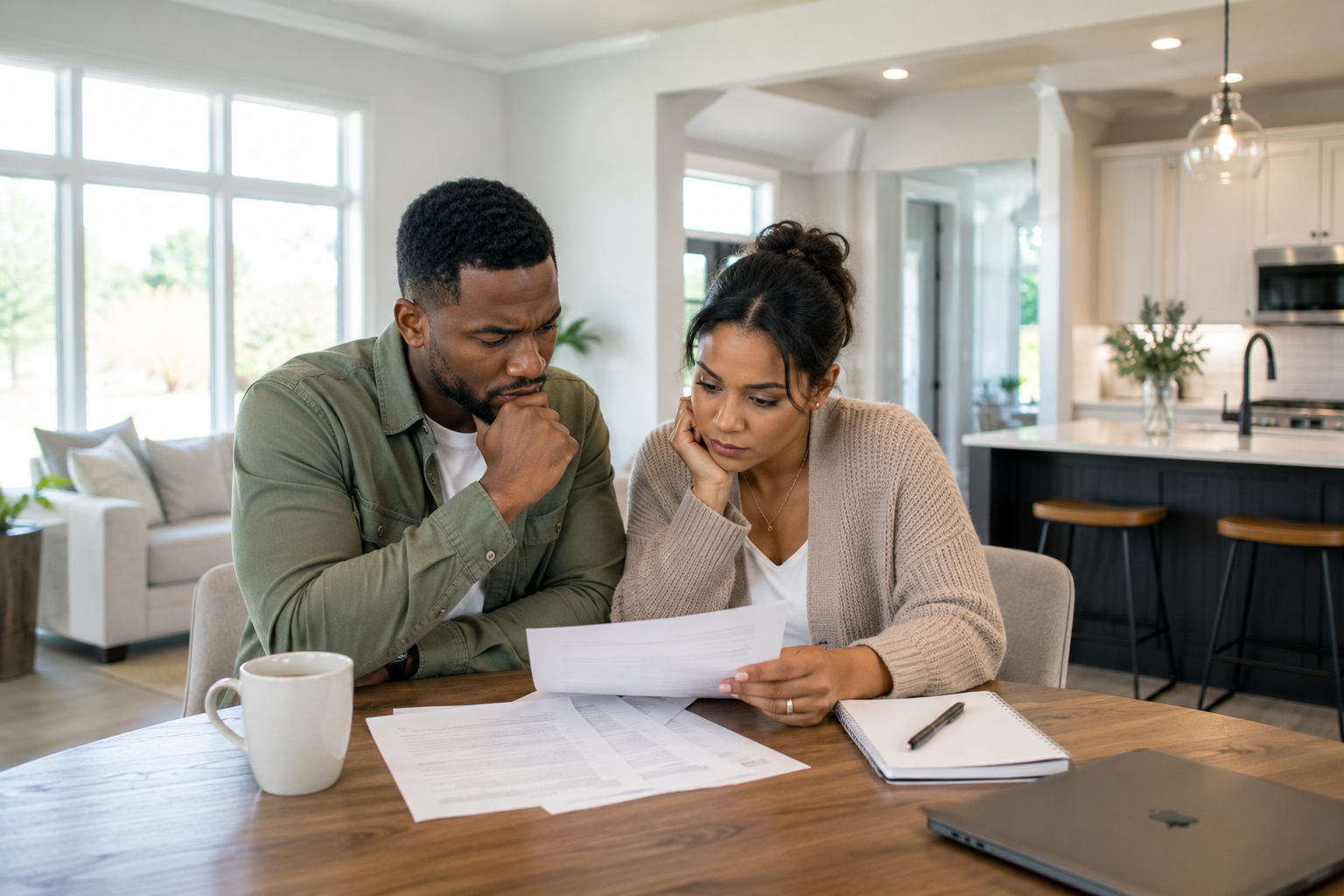
Something that can surprise buyers is how suddenly the emotional pressure can appear during the process.
I remember buyers touring newer homes around Greenville after spending weeks comparing:
* neighborhoods
* floor plans
* builder options
* monthly payments
* upgrades
At first, everything felt exciting.
But eventually, they sat down during a model home visit and quietly said:
“This suddenly feels way more serious than we expected.”
And honestly, that moment is extremely common.
Because at some point buyers stop thinking:
“This would be nice to have.”
And start thinking:
“We have to make a smart long-term decision.”
Suddenly buyers begin worrying about:
* maintenance
* monthly expenses
* future stability
* protecting savings
* family responsibility
* long-term comfort
* whether the home will truly support everyday life
That emotional shift can feel heavy.
Especially when buyers are trying so hard not to make a mistake.
What Can Help
If the home-buying process suddenly starts feeling emotionally overwhelming, it can help to slow down and simplify the decision-making process.
A lot of first-time buyers feel pressure to:
* compare everything perfectly
* understand every detail immediately
* avoid every possible mistake
But realistically, buying a home is a learning process too.
Some things that can help buyers feel more emotionally grounded include:
Focusing on Everyday Life
Instead of trying to find the “perfect” house, buyers sometimes benefit from asking:
“How will this home support everyday life?”
Things like:
* kitchen flow
* storage
* lighting
* parking
* outdoor space
* flexible rooms
* neighborhood atmosphere
often affect daily comfort much more than buyers initially realize.
Slowing Down Mentally
Many buyers become emotionally overwhelmed because they are constantly:
* touring homes
* scrolling listings
* comparing upgrades
* analyzing pricing
* second-guessing decisions
Taking mental breaks during the process can help reduce emotional overload.
Understanding That Uncertainty Is Normal
A lot of buyers assume:
“If we still feel nervous, maybe this is the wrong decision.”
But honestly, uncertainty is very common during large financial decisions.
Feeling responsibility does not automatically mean something is wrong.
Thinking Long-Term Instead of Perfectly
Many newer Greenville homes are intentionally designed around:
* long-term functionality
* practical layouts
* emotional comfort
* flexible living
* peaceful routines
Buyers often feel calmer once they stop searching for perfection and start focusing on whether the home realistically supports the life they want to build.
Some first-time buyers also notice that once the emotional pressure and mental overload of homeownership starts building, they begin emotionally connecting much more strongly to homes that simply feel calm, functional, and emotionally comfortable during tours.
That emotional attachment becomes very common in newer Greenville homes with open-concept living spaces.
Common Things That Trip Buyers Up
* Trying to compare every home perfectly
* Overthinking every decision
* Touring too many homes too quickly
* Assuming nervousness means something is wrong
* Focusing only on upgrades instead of functionality
* Ignoring emotional exhaustion
* Feeling pressure to have every answer immediately
* Comparing themselves to other buyers
* Forgetting to think about daily routines
* Trying to remove emotions completely from decision-making
Many buyers eventually realize emotional clarity often comes from slowing down, not speeding up.
FAQ
Is it normal for buying a home to suddenly feel overwhelming?
Absolutely.
Many first-time buyers feel emotionally overloaded once the responsibility of homeownership starts feeling more real.
Why does the process feel emotionally heavier over time?
Because buyers eventually stop imagining only the exciting parts and begin thinking about long-term responsibility, stability, and future planning.
Do newer Greenville homes help reduce stress for buyers?
Many newer communities are intentionally designed around:
* functionality
* flexible layouts
* open living
* practical routines
* emotional comfort
which can help buyers feel more supported day-to-day.
Can buyers still feel nervous even when they find the right home?
Yes.
Feeling nervous during a large financial decision is extremely common and does not automatically mean the decision is wrong.
Final Thoughts
A lot of first-time buyers in Greenville, South Carolina are surprised by how emotionally heavy the home-buying process can suddenly feel.
And honestly, that reaction makes sense.
Buying a home represents much more than a transaction.
It represents:
* responsibility
* future planning
* stability
* emotional security
* long-term routines
* protecting the people and life you care about most
That’s why many buyers eventually realize the goal is not finding a “perfect” home.
It’s finding a home that realistically supports everyday life in a calm, functional, emotionally sustainable way.
And sometimes, slowing down emotionally is what helps buyers feel more confident moving forward.
This article is for general informational purposes only.
Work With Charlene
Charlene Vandaele is a real estate agent with Fathom Realty in Greenville, South Carolina helping first-time home buyers navigate new construction and newer homes with clarity and confidence.
864-345-9076
Quick Recap
* Many first-time buyers feel emotionally overwhelmed during the process
* Homeownership often feels heavier once responsibility becomes real
* Emotional uncertainty is extremely common during large financial decisions
* Newer Greenville homes are often designed around functional living
* Buyers benefit from focusing on everyday life instead of perfection
* Mental overload often comes from constant comparison and decision fatigue
* Slowing down emotionally can help buyers feel more confident long-terma