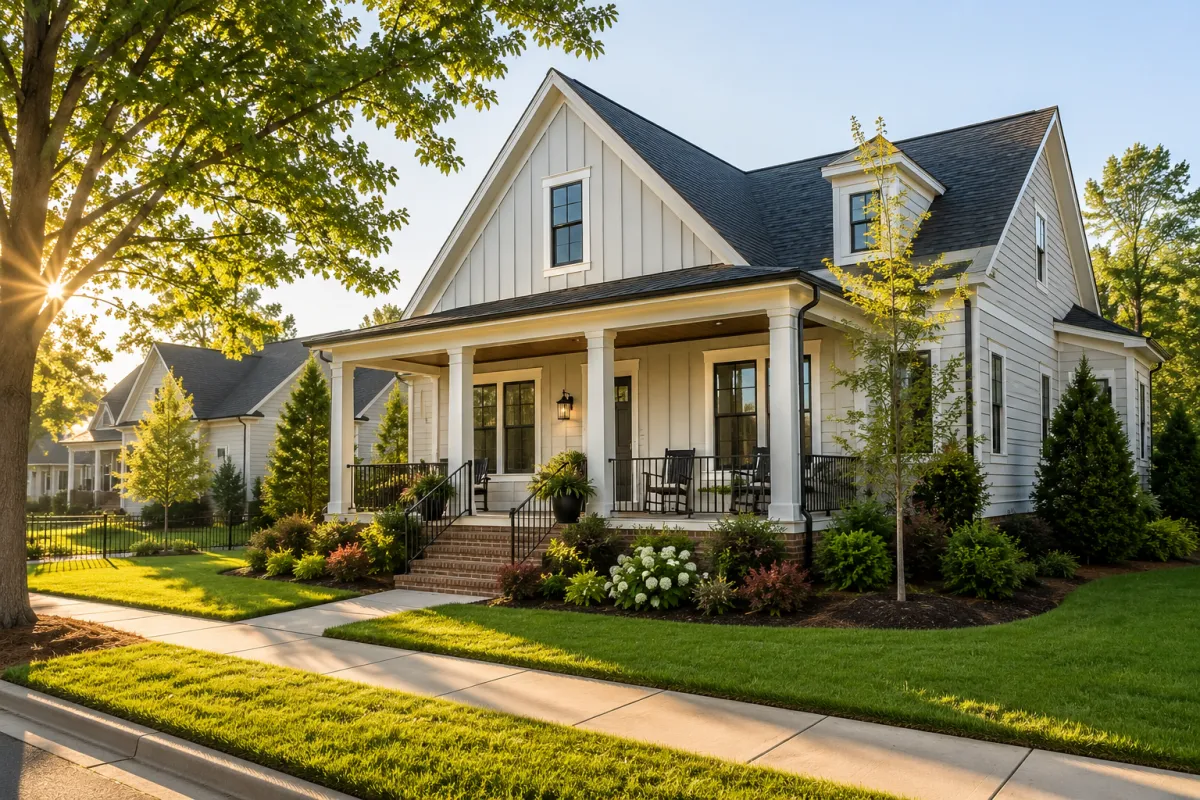
Why Do Buyers in Simpsonville, South Carolina Emotionally Connect to Homes Designed for Everyday Living?
At First Glance
Many buyers in Simpsonville, South Carolina start their home search looking at obvious features.
They notice:
* square footage
* upgraded kitchens
* large primary suites
* beautiful finishes
* attractive exteriors
But as they tour more homes, something often changes.
They begin paying attention to how a home feels during everyday life.
Instead of focusing solely on impressive features, they start imagining morning routines, weeknight dinners, dog walks, laundry days, and quiet evenings at home.
For many buyers, that shift creates a stronger emotional connection than any upgrade package ever could.
They aren't just evaluating a house anymore.
They're evaluating whether a home supports the life they want to live.
Why This Matters
One thing many first-time buyers start noticing is that beautiful homes and functional homes aren't always the same thing.
A home can have gorgeous finishes and still feel difficult to live in.
On the other hand, a home with thoughtful design often creates comfort almost immediately.
Many newer homes throughout Simpsonville and nearby Greenville are designed around everyday living.
Features commonly found in newer communities include:
* open-concept layouts
* kitchen islands
* flexible bonus spaces
* mudrooms
* walk-in pantries
* covered patios
* larger laundry rooms
* abundant storage
These features aren't necessarily exciting because they're luxurious.
They're valuable because they make daily life easier.
A lot of buyers begin realizing that emotional comfort often comes from functionality.
When a home works well, people tend to feel more relaxed inside it.
Storage reduces clutter.
Natural light improves mood.
Flexible spaces reduce stress.
Thoughtful layouts simplify routines.
Over time, these seemingly small details can have a meaningful impact on everyday life.
A Real Moment During the Buying Process
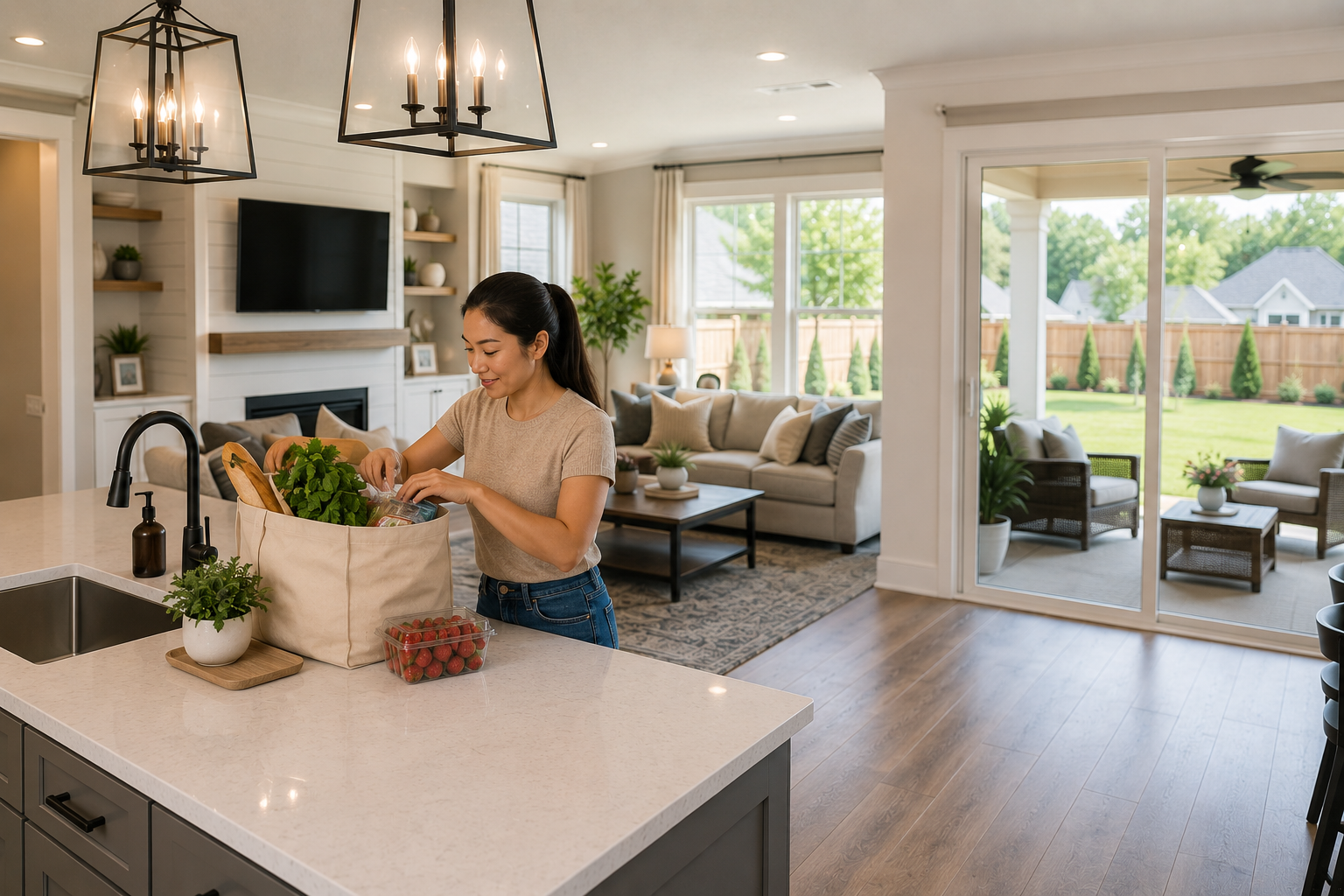
One thing that can happen during tours is that buyers unexpectedly connect with a home that isn't necessarily the most expensive or upgraded option.
I remember walking through a newer Simpsonville home with buyers who had toured several beautiful properties.
Many of those homes had impressive finishes.
They had upgraded countertops.
Designer lighting.
Large primary suites.
Yet none of them felt quite right.
Then we toured a home with a practical layout.
The kitchen connected naturally to the living area.
The laundry room was conveniently located.
The pantry offered plenty of storage.
There was a covered patio overlooking a manageable backyard.
As we walked through the home, one buyer quietly said:
"I can actually picture our life here."
The comment wasn't about upgrades.
It wasn't about luxury.
It was about comfort.
The home felt supportive.
The routines they imagined there felt realistic.
And that emotional connection happened because the home was designed around everyday living.
What Can Help
If you're touring homes and finding yourself emotionally attached to practical layouts, that's completely normal.
Many buyers discover that functionality plays a bigger role than expected.
A few things can help as you evaluate homes.
Pay Attention to Daily Routines
Ask yourself:
* Where would mornings begin?
* How would groceries get into the house?
* Where would backpacks, shoes, or pet supplies go?
* How would laundry fit into weekly routines?
These questions often reveal whether a home supports everyday life.
Focus on Flow
Instead of evaluating rooms individually, consider how the spaces connect.
Pay attention to:
* kitchen flow
* sight lines
* outdoor access
* storage locations
* traffic patterns
A well-designed flow can make a home feel larger and more comfortable.
Consider Long-Term Functionality
Many buyers focus heavily on current needs.
It can also help to think ahead.
Ask:
* Will this layout still work in five years?
* Does the home offer flexibility?
* Can spaces adapt if life changes?
Notice Emotional Comfort
Something that surprises many buyers is how quickly they recognize a home that feels easy to live in.
If a home feels calm, organized, and supportive, that's worth paying attention to.
Think Beyond Finishes
Paint colors and fixtures can often be changed.
A layout is much harder to change.
Many buyers find more long-term satisfaction by prioritizing functionality first.
As buyers experience the comfort that comes from a home designed around everyday life, many start realizing they don't need a flawless home to be happy. That shift often helps them let go of the pressure of finding something perfect.
Common Things That Trip Buyers Up
* Focusing only on cosmetic upgrades
* Ignoring storage needs
* Underestimating daily routines
* Prioritizing appearance over functionality
* Overlooking kitchen flow
* Forgetting future flexibility
* Ignoring outdoor usability
* Assuming larger always means better
* Evaluating rooms separately instead of as a system
* Rushing emotional decisions
FAQ
Why do buyers often connect with functional homes?
Because practical layouts often reduce stress and support everyday routines, which creates a stronger sense of comfort.
Are upgrades more important than layout?
Many buyers find that layout has a greater long-term impact on daily life than cosmetic finishes.
What features support everyday living?
Storage, kitchen flow, natural light, flexible rooms, outdoor spaces, and thoughtful organization are often highly valued.
Why do newer homes often feel easier to live in?
Many newer homes are intentionally designed around modern lifestyles and daily routines.
Final Thoughts
Many buyers in Simpsonville, South Carolina start their search focused on visible features.
That's completely understandable.
But as the process unfolds, a lot of buyers begin paying closer attention to something deeper.
They start noticing how a home functions.
How it supports routines.
How it simplifies everyday tasks.
How it feels.
In many cases, the homes that create the strongest emotional connection aren't the ones with the most upgrades.
They're the ones that quietly make life easier.
And for many buyers, that's exactly what turns a house into a place that feels like home.
This article is for general informational purposes only.
Work With Charlene
Charlene Vandaele is a real estate agent with Fathom Realty in Greenville, South Carolina helping first-time home buyers navigate new construction and newer homes with clarity and confidence.
864-345-9076
Quick Recap
* Many buyers emotionally connect to homes designed for everyday living
* Functionality often creates comfort and confidence
* Storage, flow, and flexibility matter more than many buyers expect
* Practical layouts can support long-term satisfaction
* Everyday routines are important evaluation tools
* Emotional comfort often comes from thoughtful design
* The best homes balance beauty and functionality