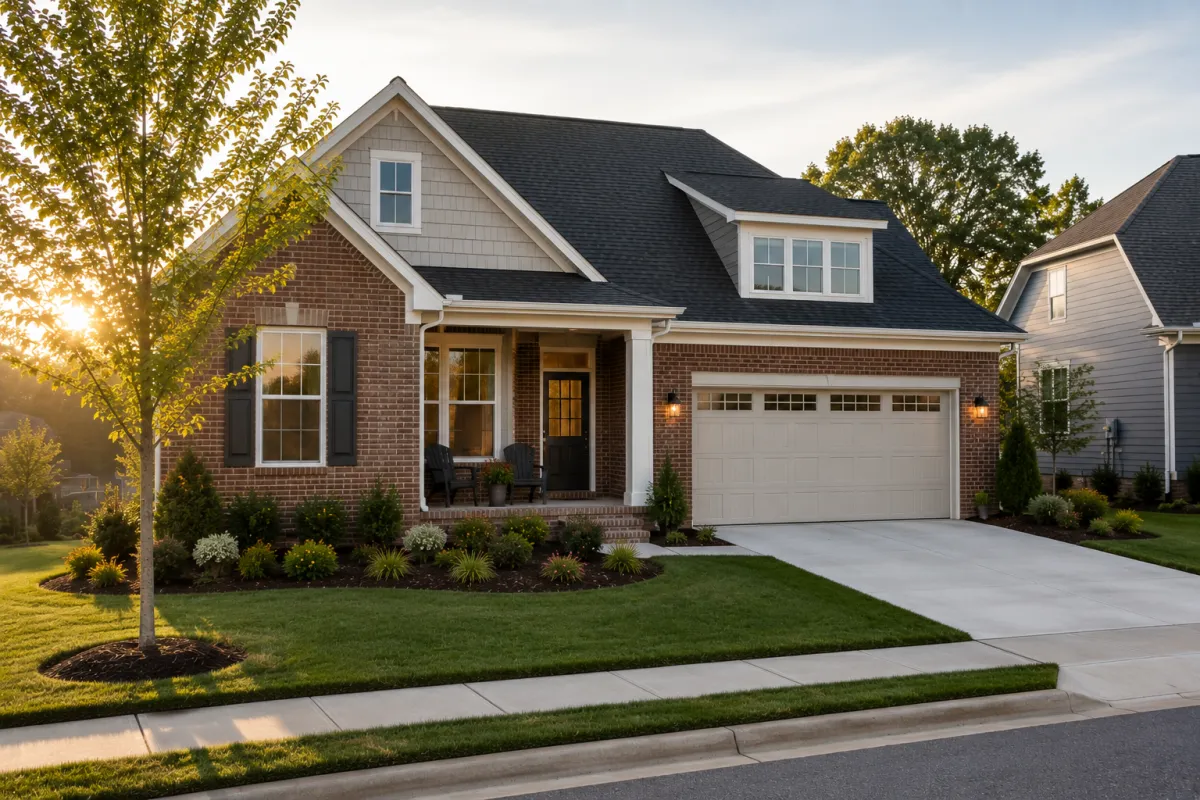
Why Do Buyers in Greenville, South Carolina Worry About Choosing a Home That Feels Dark After Move-In?
At First Glance
Many buyers in Greenville, South Carolina worry about choosing a home that feels dark after move-in because natural light affects far more than appearance.
It affects mood.
It affects comfort.
It affects how a home feels throughout the day.
At first, buyers are often focused on obvious features.
The beautiful kitchen.
The attractive finishes.
The spacious primary suite.
The open-concept layout.
But during the home search process, some buyers begin wondering:
"What if this home feels different once we're actually living in it?"
That's often where concerns about natural light begin.
Why This Matters
One thing many first-time buyers start noticing is that homes can feel very different depending on the time of day.
A home toured at noon may feel completely different in the evening.
A bright model home may create one impression.
A partially completed new construction home may create another.
Something that can surprise buyers is how much natural light influences their experience after move-in.
Many newer homes and builder communities throughout Greenville are intentionally designed to bring light into everyday living spaces.
Large windows.
Open-concept layouts.
Thoughtful room placement.
Glass doors leading to outdoor living spaces.
These features don't just make a home look beautiful.
They often make a home feel more inviting.
More comfortable.
More open.
That's one reason buyers are naturally drawn to homes with abundant natural light.
The large windows create beautiful light throughout the day.
The kitchen feels welcoming.
The living room feels brighter.
The entire space feels more enjoyable.
And that's important.
Beautiful homes should create excitement.
The goal isn't to ignore emotional reactions.
The goal is to understand why certain homes feel the way they do.
Because after move-in day, buyers aren't just looking at the home.
They're living in it.
A Real Moment During the Buying Process

Imagine a first-time buyer touring several newer homes in Greenville.
One home immediately catches her attention.
The kitchen is beautiful.
The finishes are attractive.
The floor plan feels open and functional.
Everything seems perfect.
A few days later she returns for another visit.
This time the weather is different.
The lighting feels different.
The rooms seem darker than she remembered.
Suddenly she starts questioning herself.
Was the home brighter during the first visit?
Would it feel dark during winter?
Would she regret not paying more attention to the windows?
As she walks through the home she quietly says:
"What if we move in and it doesn't feel the same?"
That concern is more common than many buyers realize.
Because natural light isn't just a design feature.
It's part of how a home feels.
And buyers often recognize that instinctively.
What Can Help
When evaluating natural light, it can help to look beyond the finishes and focus on how the home functions throughout the day.
Some helpful questions include:
* Which direction does the home face?
* Where are the largest windows located?
* How much light reaches the main living areas?
* What time of day am I touring the home?
* Are there covered porches affecting interior light?
* Are neighboring homes blocking sunlight?
* How does the home feel in different rooms?
* Would I enjoy spending time here on a cloudy day?
It can also help to pay attention to design features that often influence brightness:
* Large windows
* Sliding glass doors
* Open-concept floor plans
* Ceiling height
* Window placement
* Interior paint colors
* Outdoor obstructions
* Room orientation
Many newer homes do an excellent job balancing beautiful design with practical functionality.
Natural light often becomes part of that equation.
The kitchen feels inviting because of the windows.
The living room feels open because light flows through the space.
The primary suite feels relaxing because it doesn't feel closed in.
These details may seem small during a tour.
But they can have a meaningful impact on daily life.
Enjoy the beauty.
Understand the lifestyle.
Appreciate the finishes.
Evaluate the functionality.
Many buyers start by worrying that a home could feel darker than expected after move-in. As they continue touring properties, they often discover that the amount of natural light isn't just about the number of windows. It also depends on where those windows are placed throughout the home. That's why many buyers eventually begin asking a different question: should they pay more attention to window placement or room size?
Common Things That Trip Buyers Up
* Touring homes at only one time of day
* Focusing only on finishes
* Ignoring window placement
* Assuming all open floor plans receive equal light
* Forgetting seasonal changes
* Overlooking neighboring homes and trees
* Comparing model homes to unfinished homes
* Focusing only on square footage
* Underestimating how light affects mood
* Rushing the evaluation process
FAQ
Why is natural light so important when buying a home?
Natural light often affects comfort, mood, enjoyment of the space, and how open a home feels throughout the day.
Can a beautiful home still feel dark?
Yes. Attractive finishes and thoughtful design can still exist in homes with limited natural light.
Should buyers visit homes more than once?
Many buyers find it helpful to visit at different times of day when possible to better understand how the home feels.
Do newer homes usually have more natural light?
Many newer homes are designed with larger windows and open layouts that can help maximize natural light.
Final Thoughts
Many buyers think they're evaluating square footage, finishes, and floor plans.
In reality, they're often evaluating how a home makes them feel.
Natural light plays a significant role in that experience.
The beautiful kitchen matters.
The attractive finishes matter.
The thoughtful layout matters.
But so does the way sunlight moves through the home.
Because after move-in day, buyers don't just remember the countertops or cabinet colors.
They remember how the home feels on a Tuesday morning.
How it feels on a rainy afternoon.
How it feels when everyday life settles in.
That's why concerns about natural light are so common.
They're really concerns about comfort.
And comfort is an important part of feeling at home.
This article is for general informational purposes only.
Work With Charlene
Charlene Vandaele is a real estate agent with Fathom Realty in Greenville, South Carolina helping first-time home buyers navigate new construction and newer homes with clarity and confidence.
864-345-9076
Quick Recap
* Many buyers worry about choosing a home that feels dark after move-in.
* Natural light influences comfort, mood, and everyday enjoyment.
* Homes can feel different depending on the time of day.
* Window placement and layout matter as much as finishes.
* Beautiful design and natural light often work together.
* The strongest decisions balance appearance, functionality, and daily livability.