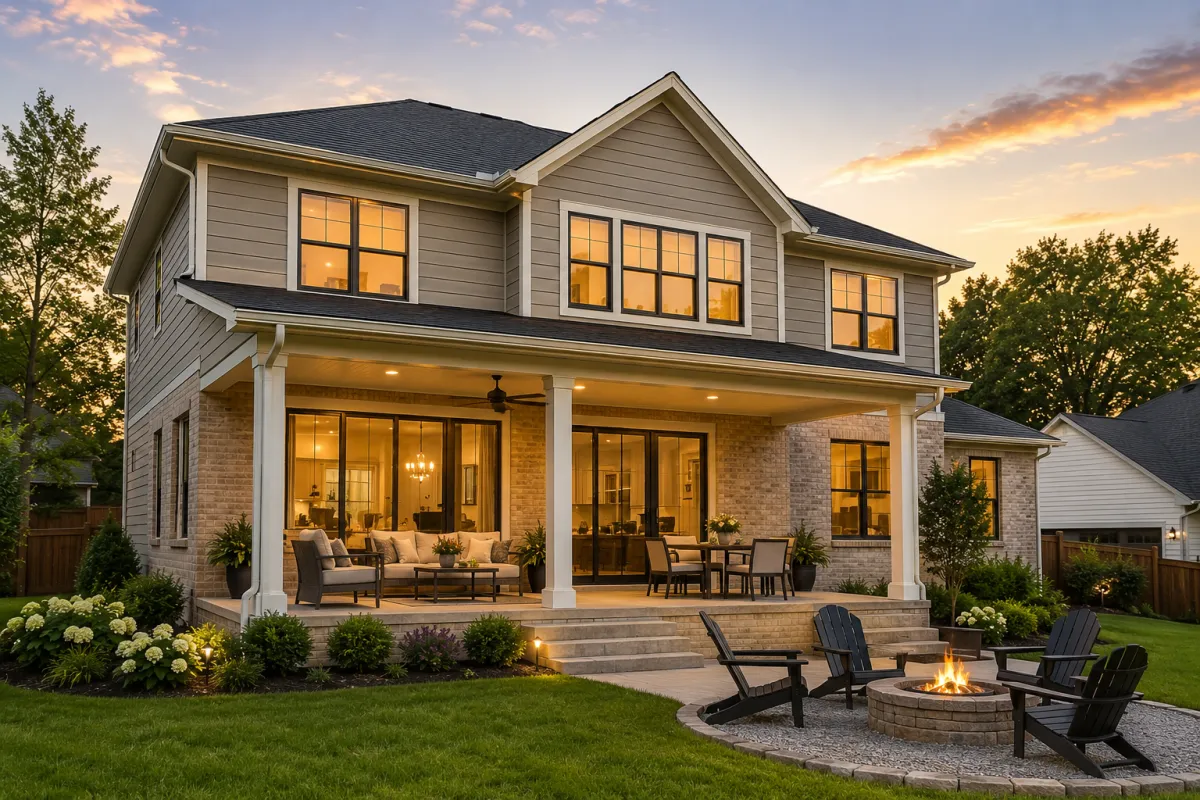
Why Do Buyers in Greenville, South Carolina Start Caring More About Gathering Spaces Than Formal Rooms?
At First Glance
A lot of buyers in Greenville, South Carolina begin the home search thinking about space.
How many bedrooms?
How many bathrooms?
How much square footage?
But something interesting often happens during home tours.
Many buyers start paying less attention to formal dining rooms, formal living rooms, and spaces that look impressive on paper.
Instead, they become drawn to gathering spaces.
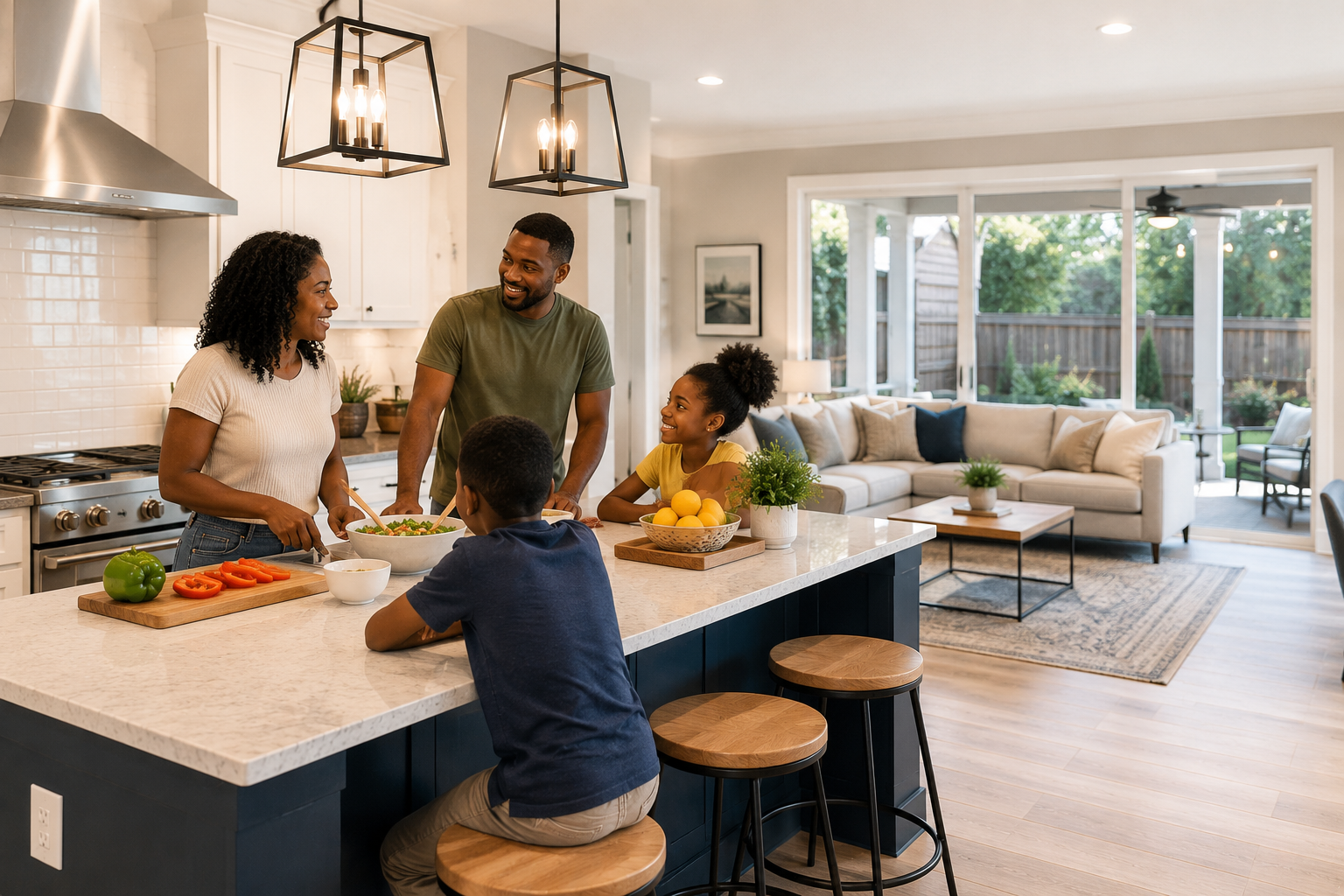
They notice large kitchen islands.
Open-concept living rooms.
Covered patios.
Flexible dining areas.
Backyards designed for everyday life.
For many first-time buyers, the question gradually shifts from:
"How many rooms does this home have?"
to
"Where will life actually happen?"
Why This Matters
Many newer homes and builder communities throughout Greenville are designed differently than homes built decades ago.
Today's buyers often live differently.
Many people work remotely at least part of the week.
Families gather in kitchens.
Friends tend to congregate around islands and open living spaces.
People want spaces that feel connected rather than separated.
As a result, gathering spaces often become more important than formal rooms.
One thing many buyers begin realizing is that they aren't shopping for rooms.
They're shopping for experiences.
They're imagining:
* holiday gatherings
* birthday celebrations
* game nights
* conversations after dinner
* relaxing weekends
* everyday routines
A formal dining room may look beautiful.
But if it's rarely used, buyers sometimes begin questioning how much value it adds to their everyday lives.
Meanwhile, a well-designed kitchen with an oversized island may become the center of daily activity.
This is one reason many newer homes throughout Greenville and nearby Simpsonville emphasize:
* open-concept layouts
* connected living spaces
* outdoor entertaining areas
* flexible rooms
* multi-purpose spaces
These designs often support how people actually live today.
A Real Moment During the Buying Process
One thing that can happen during home tours is that buyers stop evaluating homes room by room.
Instead, they start imagining movement through the home.
I remember walking through a newer Greenville home with buyers who initially had a long list of must-have features.
One item near the top of their list was a formal dining room.
They had talked about it repeatedly before touring homes.
As we visited several properties, something interesting happened.
The formal dining rooms rarely generated much conversation.
But the kitchens did.
The islands did.
The covered patios did.
The open living rooms did.
At one point, we walked through a home with a large island overlooking the living room and backyard.
One of the buyers stopped and smiled.
She said:
"This is where everybody would end up anyway."
That simple comment revealed something important.
She wasn't imagining furniture.
She was imagining people.
The conversation shifted immediately.
Instead of discussing room labels, they started discussing:
* hosting family
* cooking together
* spending time with friends
* everyday routines
The home suddenly felt more personal.
And often, that's when emotional attachment begins developing.
What Can Help
If you're touring homes and finding yourself drawn toward gathering spaces, that's completely normal.
Many buyers begin prioritizing functionality and connection as they move through the process.
A few things can help.
Think About Daily Life
Ask yourself:
* Where will we spend most of our time?
* Where will conversations happen?
* Where will people naturally gather?
The answers may surprise you.
Focus on Functionality
Look beyond room labels.
Pay attention to:
* kitchen flow
* island placement
* sight lines
* natural light
* outdoor access
* living room connection
Ask:
"How will this home support everyday life?"
Consider Flexibility
Many buyers appreciate spaces that can adapt over time.
Flexible rooms often provide more long-term value than highly specialized spaces.
Picture Real Gatherings
Imagine:
* family dinners
* birthdays
* holidays
* casual weekends
* morning coffee
Which spaces support those moments most naturally?
Don't Ignore Emotional Reactions
Practical evaluation matters.
But emotional responses matter too.
If a gathering space immediately feels comfortable and inviting, that reaction may be telling you something important.
As buyers begin prioritizing gathering spaces and everyday functionality, many find themselves emotionally attached to homes that simply feel easier to live in. Often, it's the practical layouts and daily convenience that create the strongest connection.
Common Things That Trip Buyers Up
* Focusing only on square footage
* Assuming larger rooms automatically add value
* Overlooking functionality
* Ignoring traffic flow
* Prioritizing appearance over usability
* Getting attached to room labels
* Forgetting how they actually live
* Underestimating outdoor gathering spaces
* Ignoring natural light
* Evaluating homes without imagining daily routines
FAQ
Why are gathering spaces becoming more important to buyers?
Many buyers prioritize spaces that support everyday life, connection, and flexibility over rooms that may be used infrequently.
Are formal dining rooms still valuable?
They can be. It depends on how a buyer plans to use the space and whether it supports their lifestyle.
Why do newer homes often have open-concept layouts?
Many builders design homes around modern living patterns that emphasize connection, visibility, and multi-purpose spaces.
Should gathering spaces influence a buying decision?
They can. Many buyers consider how well a home's layout supports their routines, relationships, and future plans.
Final Thoughts
A lot of buyers in Greenville, South Carolina start the home search thinking primarily about features.
And features certainly matter.
But as tours continue, many buyers begin looking at homes differently.
They start paying attention to where conversations happen.
Where memories might be created.
Where family and friends naturally gather.
The spaces that often matter most aren't necessarily the most formal.
They're the ones that support real life.
The ones that encourage connection.
The ones that make everyday moments easier and more enjoyable.
And for many buyers, that's exactly what turns a house into a home.
This article is for general informational purposes only.
Work With Charlene
Charlene Vandaele is a real estate agent with Fathom Realty in Greenville, South Carolina helping first-time home buyers navigate new construction and newer homes with clarity and confidence.
864-345-9076
Quick Recap
* Many buyers begin valuing gathering spaces more than formal rooms
* Modern layouts often support connection and everyday living
* Open-concept designs encourage interaction
* Functionality often matters more than room labels
* Gathering spaces support real-life routines and relationships
* Emotional reactions can provide valuable insight
* The best layouts often balance beauty, functionality, and connection