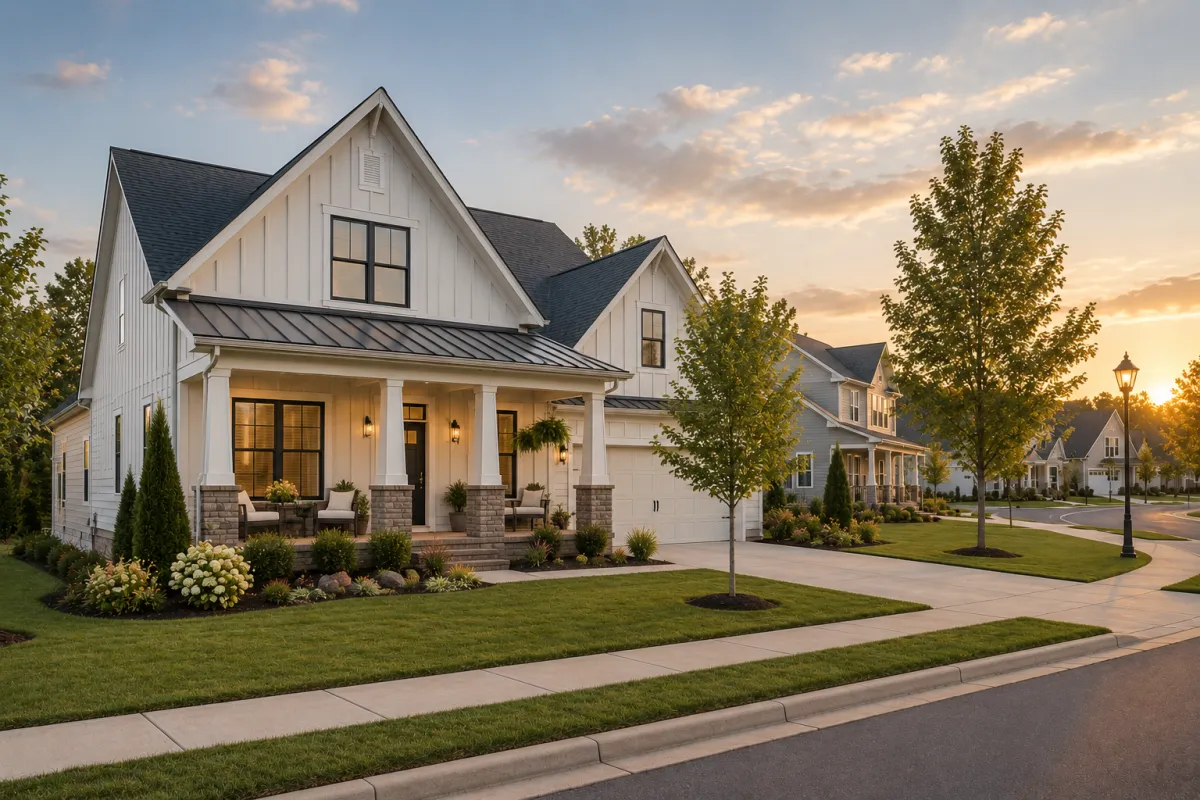
Why Do Buyers in Greenville, South Carolina Emotionally Connect to Homes That Make Daily Life Feel Easier?
At First Glance
Many buyers in Greenville, South Carolina emotionally connect to homes that make daily life feel easier because they aren't just shopping for square footage.
They're searching for relief.
Relief from stress.
Relief from clutter.
Relief from routines that feel more difficult than they need to be.
A beautiful home can capture attention immediately.
But the homes that often create the strongest emotional connection are the ones that help buyers imagine a simpler, more comfortable version of everyday life.
Why This Matters
After buyers spend weeks or months comparing homes, something interesting often happens.
The conversation begins changing.
At first, the focus is usually on price, bedrooms, commute times, and location.
Those things matter.
But eventually many buyers begin noticing how certain homes make them feel.
One thing many first-time buyers start realizing is that emotional connection often comes from functionality rather than luxury.
A home doesn't have to be extravagant to feel meaningful.
It simply needs to support everyday life in a way that feels comfortable.
Many newer homes and builder communities throughout Greenville are designed around this idea.
Large kitchen islands create space for cooking, gathering, and everyday conversations.
Open-concept layouts make it easier to stay connected while moving through daily routines.
Large windows create beautiful natural light throughout the day.
Thoughtful storage helps reduce clutter.
Flexible rooms provide options as life changes.
These features attract attention because they're beautiful.
But they also create something deeper.
They create ease.
When buyers walk through a home and immediately start imagining easier mornings, more organized spaces, or quieter evenings, an emotional connection often begins to form.
They're not just seeing the home.
They're imagining life inside it.
A Real Moment During the Buying Process

A buyer touring newer homes in Greenville had spent weeks comparing floor plans, neighborhoods, and price points.
The process felt exhausting.
Every home seemed to offer something different.
One community had a great location.
Another offered larger lots.
A third had beautiful amenities.
Then she toured a newer home that felt different.
The kitchen wasn't necessarily the largest she had seen.
The backyard wasn't the biggest.
The home wasn't filled with dramatic upgrades.
Yet something about it immediately stood out.
The layout flowed naturally.
The kitchen connected comfortably to the living area.
Storage seemed thoughtfully placed.
Natural light filled the main gathering spaces.
The flex room felt genuinely useful rather than simply extra square footage.
As she walked through the home, she became quiet.
Eventually she smiled and said:
"I think life would just feel easier here."
That statement wasn't really about the countertops or paint colors.
It was about the experience.
She was imagining less frustration.
Less clutter.
More comfort.
More flexibility.
Many buyers discover that this is the moment emotional attachment begins.
Not when a home feels impressive.
When it feels supportive.
What Can Help
If you're finding yourself emotionally drawn to certain homes, it can help to understand what's creating that reaction.
Pay Attention to Functionality
Many buyers initially focus on visual features.
It can also help to ask:
• How does the kitchen function?
• Is storage easy to access?
• Does the layout support daily routines?
• Can the spaces adapt over time?
Functionality often shapes long-term satisfaction.
Think About Everyday Frustrations
Sometimes buyers discover what they value most by identifying current frustrations.
For example:
• limited storage
• cramped kitchens
• poor room flow
• lack of natural light
• insufficient workspace
The homes that solve those problems often create strong emotional reactions.
Imagine Daily Routines
Picture an ordinary weekday.
How would mornings feel?
How would evenings feel?
How would weekends feel?
The answers often reveal more than a feature list.
Notice Emotional Comfort
Not every emotional reaction comes from excitement.
Sometimes buyers connect to a home because it feels peaceful.
Organized.
Comfortable.
Manageable.
That reaction matters too.
Balance Beauty and Practicality
Beautiful homes naturally attract buyers.
Enjoy the beauty.
Understand the lifestyle.
Appreciate the finishes.
Evaluate the functionality.
The strongest decisions often balance both.
When buyers begin imagining a home that supports everyday comfort, they often start looking beyond the house itself. The focus shifts toward lifestyle, pace, and the type of routine they hope to create after move-in day.
Common Things That Trip Buyers Up
• Assuming emotional attachment is irrational
• Focusing only on cosmetic features
• Ignoring functionality
• Overlooking storage and organization
• Comparing homes only on square footage
• Dismissing how a home feels during everyday use
• Confusing luxury with comfort
FAQ
Why do certain homes create stronger emotional reactions?
Many buyers connect emotionally to homes that feel comfortable, functional, and supportive of daily life.
Is it okay to buy a home because it feels right?
Emotional connection can be an important part of the decision. Many buyers balance emotional reactions with practical evaluation.
Do newer homes often feel easier to live in?
Many newer homes are designed around modern routines, offering features like open layouts, storage solutions, and flexible spaces.
Should functionality matter more than appearance?
Both matter. Many buyers find the strongest decisions happen when beauty and practicality work together.
Final Thoughts
Many buyers in Greenville emotionally connect to homes that make daily life feel easier because those homes offer more than attractive features.
They offer relief.
The homes that often create lasting confidence aren't necessarily the largest or most expensive.
They're frequently the homes that support everyday living.
The homes where storage feels thoughtful.
The kitchens feel inviting.
The natural light feels uplifting.
The layouts feel practical.
The routines feel easier.
Beautiful design plays an important role in the home-buying experience.
But long-term satisfaction often comes from how that design supports real life after move-in day.
The goal isn't simply finding a beautiful home.
The goal is finding a home that helps everyday life feel a little easier.
This article is for general informational purposes only.
Work With Charlene
Charlene Vandaele is a real estate agent with Fathom Realty in Greenville, South Carolina helping first-time home buyers navigate new construction and newer homes with clarity and confidence.
864-345-9076
Quick Recap
• Many buyers connect emotionally to homes that simplify daily life
• Functionality often creates stronger attachment than luxury
• Thoughtful layouts can reduce stress and improve routines
• Beauty and practicality work best together
• The right home often feels supportive long after move-in day