
Why Do Buyers in Greenville, South Carolina Emotionally Connect to Homes That Feel Both Beautiful and Livable?
At First Glance
Many buyers in Greenville, South Carolina emotionally connect to homes that feel both beautiful and livable because those homes solve two important needs at the same time.
They inspire excitement.
And they create comfort.
After spending weeks comparing floor plans, finishes, storage options, and budgets, buyers sometimes walk into a home and experience something different.
Instead of evaluating.
They start imagining.
Suddenly the conversation changes.
The home no longer feels like a product.
It starts feeling like a place where life could happen.
That's often when emotional connection begins.
Why This Matters
One thing many first-time buyers start noticing is that emotional connection usually doesn't happen because a home is perfect.
It happens because a home feels aligned with their priorities.
Earlier in the home search process, buyers are often focused on practical concerns.
Questions like:
* Can we afford it?
* Is there enough storage?
* Does the layout work?
* What if our needs change?
* Are we making the right decision?
Those questions are important.
But once buyers begin finding homes that meet many of those practical needs, something else often emerges.
They start paying attention to how the home feels.
Many newer homes and builder communities throughout Greenville are intentionally designed around both functionality and comfort.
Features such as:
* open-concept layouts
* natural light
* flexible living spaces
* kitchen islands
* covered patios
* walk-in pantries
* useful storage
* connected gathering areas
often help buyers picture everyday life more easily.
Something that can surprise buyers is that emotional connection frequently comes from functionality.
Not just appearance.
The kitchen works.
The storage makes sense.
The layout flows naturally.
The living spaces feel comfortable.
The home supports routines.
And because of that, buyers begin feeling emotionally comfortable there.
That's very different from simply admiring beautiful finishes.
It's about imagining life.
A Real Moment During the Buying Process
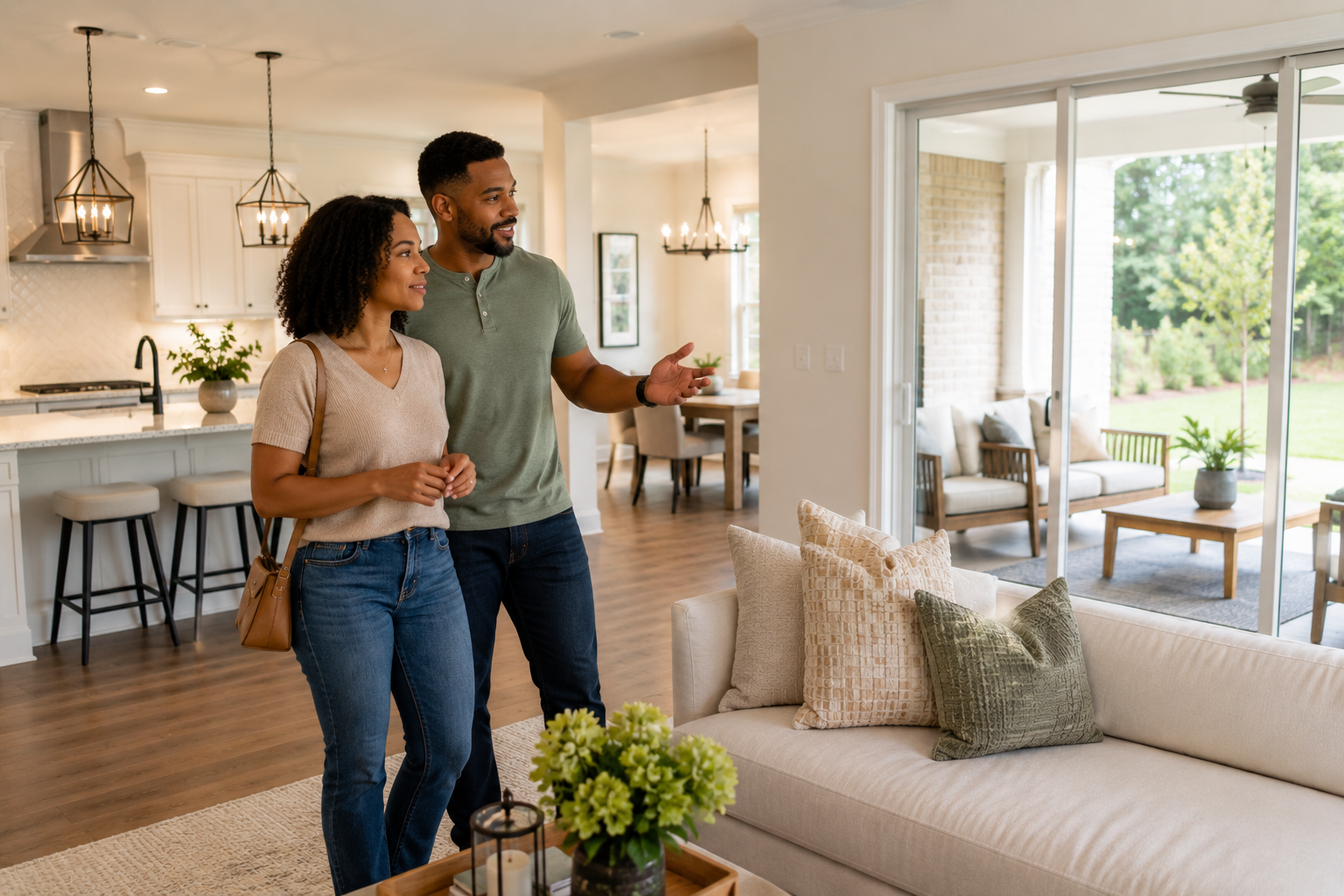
One thing that can happen during tours is that buyers stop analyzing and start picturing their future.
I remember touring newer homes in Greenville with buyers who had spent weeks comparing communities and floor plans.
Every conversation had been practical.
Storage.
Pricing.
Builder options.
Square footage.
Functionality.
They wanted to make the smartest decision possible.
As we toured one particular home, something changed.
The finishes were attractive.
But what stood out more was how naturally the home seemed to work.
The kitchen connected easily to the living room.
Large windows brought in natural light.
The pantry offered plenty of storage.
The flex room felt useful instead of forced.
The covered patio extended the living space outdoors.
The buyers slowed down.
They spent more time in each room.
Instead of asking questions, they started making observations.
One buyer pointed toward the kitchen island and said:
"I can actually picture us here."
A few minutes later they were discussing family dinners.
Weekend projects.
Morning coffee.
Evening routines.
Eventually one of them smiled and quietly said:
"This feels different."
What they were describing wasn't excitement.
It was connection.
The home wasn't simply beautiful.
It felt livable.
And that's often where emotional attachment begins.
What Can Help
If you find yourself connecting emotionally to a home, a few things can help you evaluate that feeling thoughtfully.
Pay Attention to Why It Feels Right
Ask yourself:
* Is it the layout?
* Is it the natural light?
* Is it the functionality?
* Is it the overall atmosphere?
Understanding the reason behind the connection creates clarity.
Imagine Everyday Life
Many buyers find it helpful to picture:
* weekday mornings
* family dinners
* working from home
* hosting friends
* relaxing after work
Can you naturally imagine those moments here?
Evaluate Both Beauty and Function
Strong emotional connections often happen when both elements work together.
Consider:
* storage
* kitchen flow
* lighting
* flexibility
* comfort
* appearance
A balanced home often creates stronger confidence.
Notice How You Feel
Some homes stay in your thoughts long after a tour ends.
That doesn't automatically mean it's the right home.
But it can provide useful information.
Balance Emotion With Practicality
The strongest decisions usually combine:
* emotional comfort
* practical functionality
* budget alignment
* future flexibility
You don't have to choose between emotion and logic.
They can work together.
As buyers begin connecting emotionally to homes that feel beautiful and livable, many start taking the next step. They stop focusing on the house itself and begin imagining what everyday life could actually look like there.
Common Things That Trip Buyers Up
* Assuming emotional connection is irrational
* Ignoring functionality
* Focusing only on appearance
* Comparing homes strictly by numbers
* Overlooking daily routines
* Confusing excitement with long-term fit
* Ignoring storage needs
* Forgetting future flexibility
* Chasing perfection
* Overanalyzing every detail
FAQ
Is it normal to become emotionally attached to a home?
Yes. Many buyers develop emotional connections when a home aligns with both their practical needs and lifestyle goals.
Does emotional connection mean it's the right home?
Not necessarily, but it can be an important piece of information when combined with practical evaluation.
Why do some homes feel different than others?
Often it's because the layout, functionality, lighting, and atmosphere work together in a way that supports everyday living.
Should I trust my emotional reaction?
Many buyers find it helpful to acknowledge emotional reactions while also evaluating functionality, budget, and long-term fit.
Final Thoughts
Many buyers in Greenville emotionally connect to homes that feel both beautiful and livable because those homes create something buyers have been searching for throughout the process.
Relief.
After the uncertainty.
After the comparisons.
After the mental overwhelm.
A home that feels both attractive and functional often creates confidence.
Not because it's perfect.
But because buyers can finally imagine life there.
The goal isn't simply finding a beautiful home.
It's finding a home that supports everyday life while still feeling like a place you're excited to come home to.
That's often where meaningful connection begins.
This article is for general informational purposes only.
Work With Charlene
Charlene Vandaele is a real estate agent with Fathom Realty in Greenville, South Carolina helping first-time home buyers navigate new construction and newer homes with clarity and confidence.
864-345-9076
Quick Recap
* Emotional connection often happens when beauty and functionality work together
* Newer homes frequently support both comfort and practicality
* Buyers often begin imagining daily life during tours
* Functionality can create emotional comfort
* Storage, flow, and natural light matter more than many buyers expect
* Emotion and logic can work together during decision-making
* The strongest connections often come from homes that simply feel easy to live in