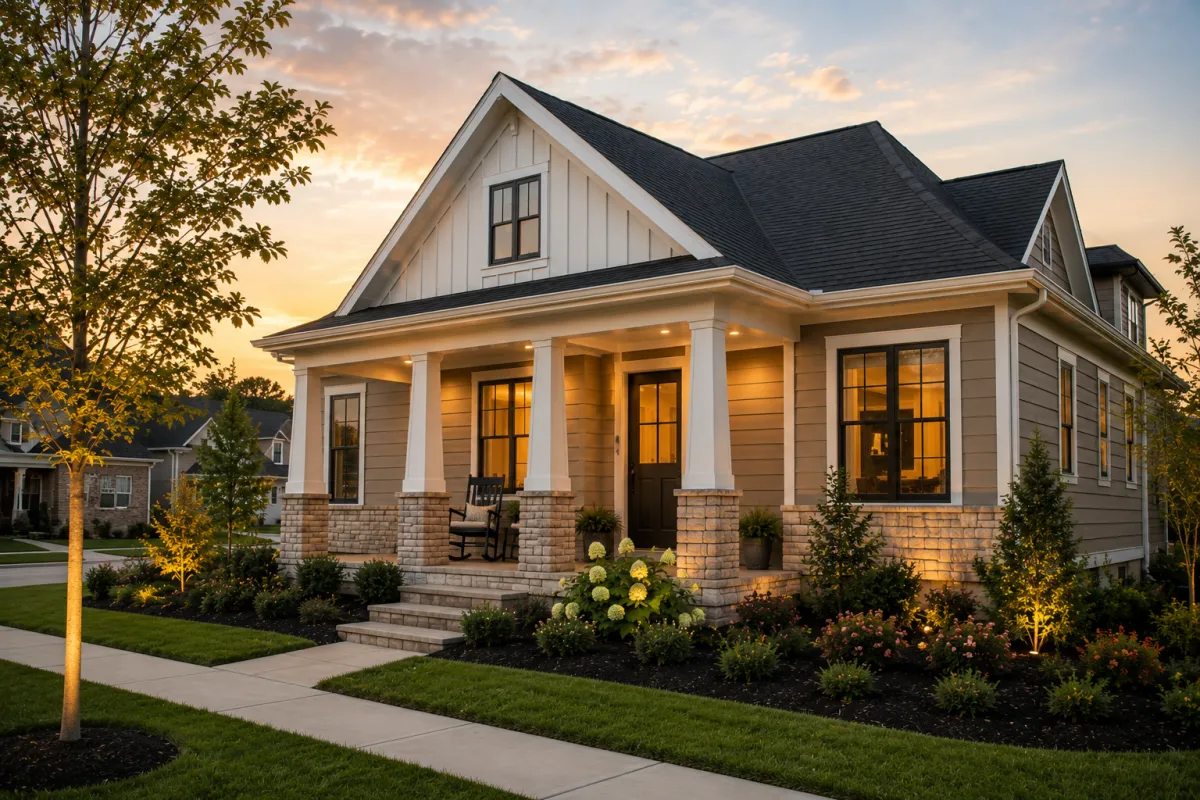
Why Do Buyers in Greenville, South Carolina Emotionally Connect to Homes That Feel Aligned With Their Values?
At First Glance
Many buyers in Greenville, South Carolina emotionally connect to homes that feel aligned with their values because they're no longer just evaluating features.
They're evaluating how a home fits the life they want to live.
At first, buyers often focus on practical considerations.
Budget.
Location.
Square footage.
Storage.
Builder reputation.
Floor plans.
But at some point during the search, something shifts.
The conversation becomes less about what a home has and more about what a home represents.
That's often when emotional connection begins.
Why This Matters
One thing many first-time buyers start noticing is that homes don't all feel the same, even when they have similar features.
Two homes may have:
* similar square footage
* comparable pricing
* similar builder quality
* modern layouts
* updated finishes
Yet one feels significantly more meaningful.
That can be confusing.
Especially for buyers who have spent weeks trying to make objective decisions.
The reason often comes down to values.
Whether buyers realize it or not, they bring their values into every home tour.
Some buyers value:
* simplicity
* flexibility
* family connection
* outdoor living
* financial peace of mind
* entertaining
* privacy
* natural light
* organization
* peaceful routines
When a home supports those priorities, buyers often feel an emotional response.
Not because they're being irrational.
But because they're recognizing alignment.
Many newer homes and builder communities throughout Greenville are intentionally designed around modern living.
Features like:
* open-concept kitchens
* flexible office spaces
* covered patios
* walk-in storage
* connected living areas
* natural gathering spaces
can support the way people actually live today.
When buyers encounter a home that reflects their values and lifestyle priorities, emotional attachment often follows naturally.
A Real Moment During the Buying Process

Something that can surprise buyers is that emotional connection rarely happens because of one dramatic feature.
It's usually much quieter than that.
I remember speaking with buyers who were touring newer homes in Greenville after several weeks of searching.
They had done everything logically.
Compared communities.
Reviewed floor plans.
Evaluated pricing.
Researched builders.
The process had been thoughtful and practical.
Then we toured a newer home that wasn't necessarily the largest option they had considered.
It wasn't the most upgraded either.
But as we walked through the home, something felt different.
The kitchen flowed naturally into the living area.
Natural light filled the main spaces.
There was a flexible room that could easily become a home office.
The backyard felt private and peaceful.
As we stood in the living room, one of the buyers quietly said:
"This feels more like us."
That statement had nothing to do with countertops.
Or square footage.
Or builder incentives.
It reflected something deeper.
The home aligned with their values.
It supported how they wanted to spend their time.
How they wanted to live.
How they wanted everyday life to feel.
And that's often when buyers begin forming an emotional connection.
What Can Help
If you find yourself emotionally connecting to a home, that doesn't automatically mean you're making a bad decision.
In fact, emotional connection can provide useful information when paired with practical evaluation.
Identify What Matters Most
Ask yourself:
* What do I value most in daily life?
* What routines are important to me?
* What helps me feel comfortable and supported?
Different buyers prioritize different things.
Understanding your values creates clarity.
Pay Attention to Functional Features
Sometimes emotional connection comes from practical functionality.
Things like:
* kitchen flow
* storage
* natural light
* flexible spaces
* outdoor living
* room placement
can have a significant impact on daily life.
The homes that feel good often function well.
Think Beyond Appearances
A lot of buyers initially focus on aesthetics.
Paint colors.
Fixtures.
Countertops.
But emotional connection often comes from something deeper.
Ask:
"How would life feel here?"
That question can reveal more than surface-level features.
Imagine Everyday Life
Instead of picturing holidays or special events, imagine ordinary moments.
* A Tuesday evening.
* A Saturday morning.
* Walking the dog.
* Cooking dinner.
* Working from home.
The best homes often support everyday life well.
Let Logic and Emotion Work Together
Some buyers believe they should ignore emotion entirely.
Others rely only on emotion.
Most successful decisions involve both.
Practical evaluation matters.
Emotional alignment matters too.
The goal isn't choosing one or the other.
It's understanding how they work together.
As buyers begin recognizing homes that align with their values, another interesting shift often occurs.
They stop focusing exclusively on the house itself and start imagining what life inside the home might actually look like.
The future becomes easier to picture.
That's often where the next stage of the journey begins.
Related article:
Common Things That Trip Buyers Up
* Assuming emotional connection is irrational
* Focusing only on square footage
* Ignoring daily routines
* Comparing homes solely on price
* Overlooking functionality
* Prioritizing trends over lifestyle
* Confusing luxury with alignment
* Ignoring neighborhood atmosphere
* Trying to remove all emotion from the decision
* Forgetting to identify personal values
FAQ
Is it normal to emotionally connect to a home?
Yes. Many buyers naturally form emotional connections when a home supports the lifestyle and values that matter most to them.
Does emotional attachment mean I should buy the home?
Not necessarily. Emotional connection is valuable information, but it should be balanced with practical considerations and thoughtful evaluation.
Why do newer homes often create strong emotional connections?
Many newer homes are designed around functionality, flexibility, and modern living patterns that align with how buyers want to use their space.
Can practical features create emotional attachment?
Absolutely. Storage, natural light, kitchen flow, outdoor spaces, and flexible layouts often contribute to emotional comfort and connection.
Final Thoughts
Many buyers in Greenville emotionally connect to homes that feel aligned with their values because they begin seeing more than features.
They begin seeing a lifestyle.
A routine.
A future.
A place that supports who they are and how they want to live.
That's not something buyers should ignore.
It's something they should understand.
The right home often isn't the one with the most upgrades or the biggest floor plan.
It's often the home that supports everyday life in meaningful ways.
When practical functionality and personal values come together, emotional connection tends to follow naturally.
And that's often when the search starts feeling less overwhelming and more clear.
This article is for general informational purposes only.
Work With Charlene
Charlene Vandaele is a real estate agent with Fathom Realty in Greenville, South Carolina helping first-time home buyers navigate new construction and newer homes with clarity and confidence.
864-345-9076
Quick Recap
* Buyers often connect emotionally to homes that reflect their values
* Emotional attachment usually develops through lifestyle alignment
* Newer homes often support modern routines and functionality
* Practical features can create emotional comfort
* Daily life matters more than buyers sometimes realize
* Logic and emotion can work together during the decision-making process
* The right home often supports the life buyers want to build