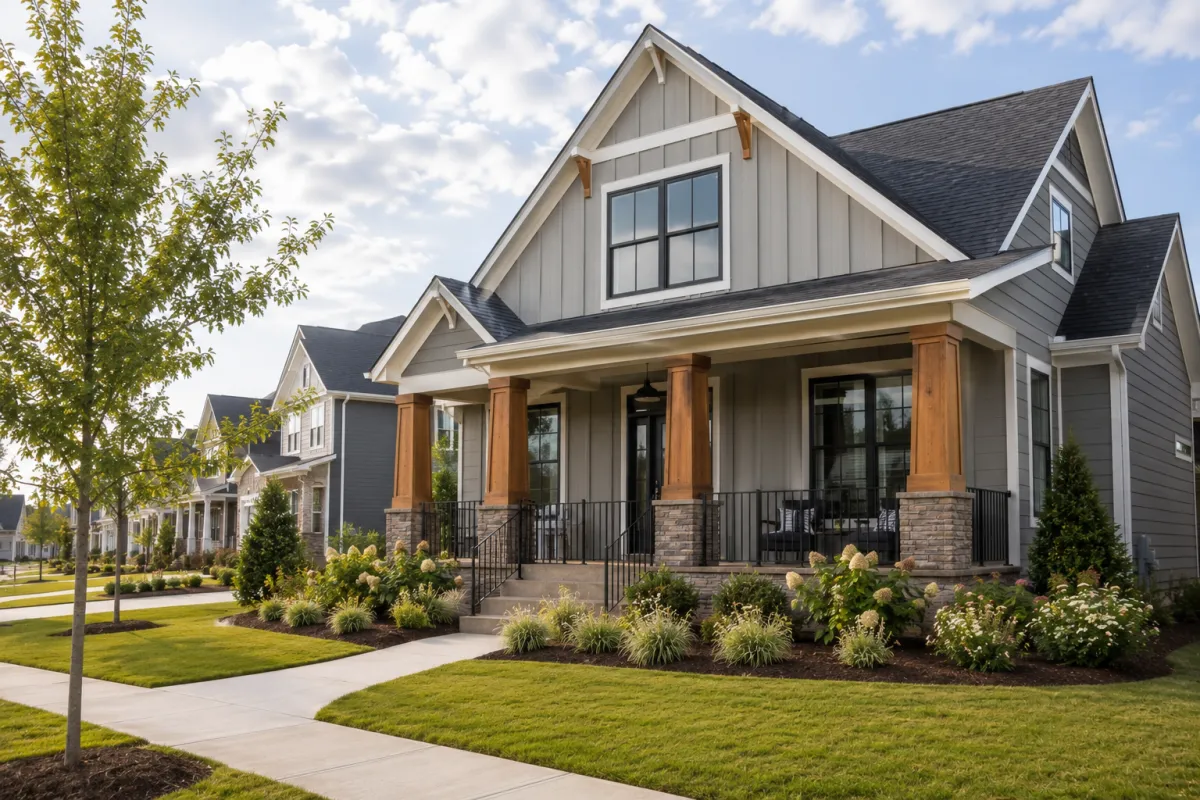
Why Can the Same Floor Plan Feel Completely Different Depending on the Design Choices?
At First Glance
While touring nearly identical new construction homes in Fountain Inn, South Carolina and Gray Court, South Carolina, I kept catching myself reacting differently to homes that were, on paper, almost exactly the same.
The walls hadn't moved.
The rooms weren't larger.
The layout was identical.
Yet one home felt bright, open, and spacious, while another felt warmer, cozier, and even a little smaller.
It reminded me of something I think many first-time home buyers discover during their search: a floor plan doesn't create your first impression by itself. The design choices inside the home shape how you experience that layout.
Why This Matters
When you're buying your first home, it's easy to assume you're choosing between different floor plans.
Sometimes you're really choosing between different presentations of the same floor plan.
Builders know how to make a home feel inviting.
Paint colors, flooring, lighting, furniture placement, window treatments, and even artwork all influence how a room feels when you walk through it.
That's not a bad thing.
Model homes are meant to help buyers imagine possibilities.
The important part is remembering that you're buying the structure and layout—not the staging.
Especially as you compare homes in areas like Fountain Inn and Gray Court, where many buyers are looking for more home within their budget, it's helpful to separate the permanent features from the design choices that can change after closing.
A Real Moment During the Buying Process
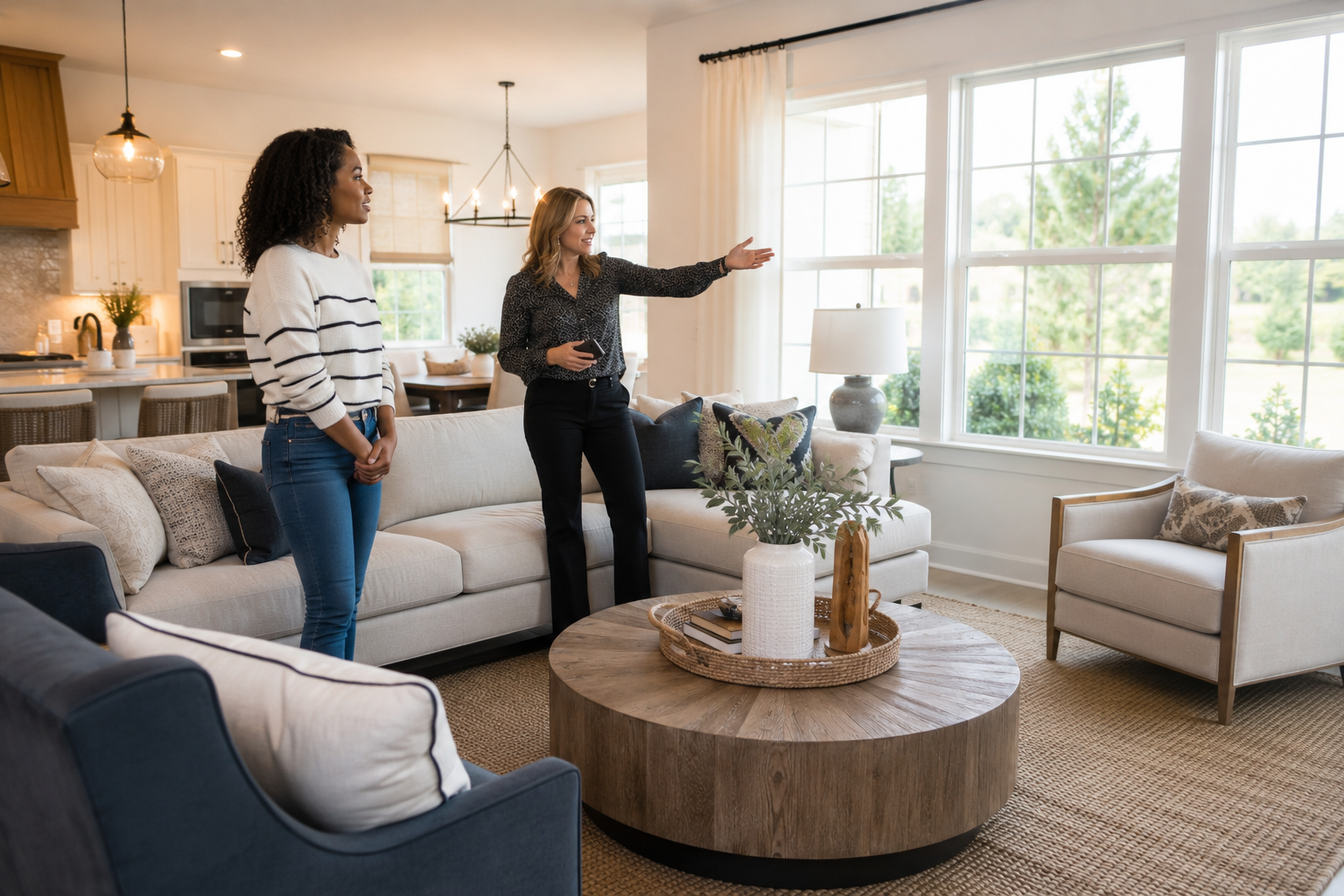
Imagine walking into one model home with white walls, large windows, light-colored flooring, and simple furniture.
Everything feels open.
Then you tour another home with the exact same floor plan.
This one has darker cabinets, richer paint colors, oversized furniture, and heavier window treatments.
Without realizing it, you may start thinking the rooms are smaller.
But are they?
Or are you responding to the way the home has been designed?
Slowing down to ask that question can completely change how you evaluate a house.
What Buyers May Want to Notice
Separate the Layout From the Decorating
One of the easiest ways to evaluate a home is to mentally remove everything that isn't permanent.
Imagine the rooms empty.
Where are the walls?
Where are the windows?
How does traffic flow through the home?
Those elements stay with the house long after the furniture is gone.
Furniture Can Change Your Perception
Model homes often use furniture that's carefully selected for the space.
A smaller sofa can make a living room appear larger.
A round dining table creates different walking paths than a rectangular one.
Instead of focusing on the furniture, imagine your own pieces in the room.
Will they fit comfortably?
Will there still be room to move around on an ordinary Tuesday?
Light Changes Everything
Natural light affects how a home feels throughout the day.
A bright room may feel larger than an identical room with less sunlight.
As you tour homes, notice where the windows are and think about when you'll spend the most time in those spaces.
Finishes Can Be Changed
Paint colors.
Light fixtures.
Cabinet hardware.
Decor.
Many of these features can be updated over time.
The floor plan is much harder to change.
That's why I encourage first-time buyers to evaluate the layout first and the finishes second.
Enjoy the beauty—but don't let it distract you from understanding how the home actually functions.
Eventually, the decorating belongs to you instead of the builder. After the moving truck is unloaded, many first-time homeowners ask the same question: "What should we buy first?"
misscharrealestate.com/post/what-should-you-buy-first-after-moving-into-a-new-home
Common Things That Can Complicate the Decision
* Assuming beautifully staged rooms are larger than they really are.
* Forgetting to picture your own furniture in the home.
* Focusing on paint colors instead of the floor plan.
* Letting temporary design choices outweigh permanent features.
* Comparing decorating styles instead of comparing layouts.
Frequently Asked Questions
Can two identical floor plans really feel different?
Yes. Lighting, furniture placement, finishes, and décor all influence how spacious or comfortable a home feels, even when the layout is identical.
Should I ignore the model home's decorating?
You don't need to ignore it, but it helps to separate the decorating from the floor plan so you can evaluate the home itself.
Why do builders stage model homes?
Staging helps buyers imagine how rooms might be used. It also highlights the home's features and flow.
What should I focus on most during a tour?
Pay attention to the room sizes, layout, natural light, storage, and how the home supports your everyday routine.
Charlene's Observations
One thing I keep coming back to is how powerful first impressions can be.
Beautiful design absolutely matters. It helps us imagine ourselves living there.
But once the furniture is gone and your own life moves in, it's the layout that stays with you.
That's why I always encourage buyers to appreciate the decorating while asking themselves one more question: "Would I still love this home if it were completely empty?"
This article is for general informational purposes only.
Work With Charlene
Charlene Vandaele is a real estate agent with Fathom Realty in Greenville, South Carolina helping first-time home buyers navigate new construction and newer homes with clarity and confidence.
864-345-9076
Quick Recap
* Design choices influence how a floor plan feels.
* Separate permanent features from temporary decorating.
* Picture your own furniture in every room.
* Focus on layout, natural light, and everyday functionality.
* Appreciate the staging, but evaluate the home beneath it.