
Why Do Buyers Emotionally Connect to Homes That Feel Comfortable and Functional?
At First Glance
Many buyers emotionally connect to homes that feel comfortable and functional because those homes help them imagine a future that feels easier.
At first, buyers often think they're responding to the beautiful kitchen.
The natural light.
The attractive finishes.
The open-concept layout.
The spa-like bathroom.
And those features absolutely matter.
But something deeper is often happening.
They're imagining daily life.
They're imagining routines.
They're imagining comfort.
That's where emotional attachment frequently begins.
Why This Matters
One thing many first-time buyers start noticing is that buying a home isn't purely a logical decision.
It can't be.
A home is where life happens.
It's where ordinary routines unfold.
It's where holidays are celebrated.
It's where quiet evenings happen after long days at work.
That's why buyers often react emotionally during home tours.
Many newer homes throughout Greenville are intentionally designed to create those feelings.
The kitchen feels inviting.
The large windows create beautiful natural light throughout the day.
The gathering spaces feel open and welcoming.
The finishes feel modern and attractive.
The floorplans feel thoughtful and intentional.
These reactions matter.
Buying a home should feel exciting.
Something that can surprise buyers is that emotional attachment often has very little to do with luxury.
Instead, it frequently comes from functionality.
A pantry that feels organized.
A laundry room that makes sense.
Storage that reduces clutter.
A floorplan that supports daily routines.
An outdoor space that feels manageable.
A lot of buyers begin realizing they're not simply attracted to beautiful homes.
They're attracted to homes that feel easy to live in.
That's an important distinction.
How will this home support everyday life?
How will this home feel to live in after move-in day?
Those questions often create stronger emotional reactions than buyers expect.
A Real Moment During the Buying Process
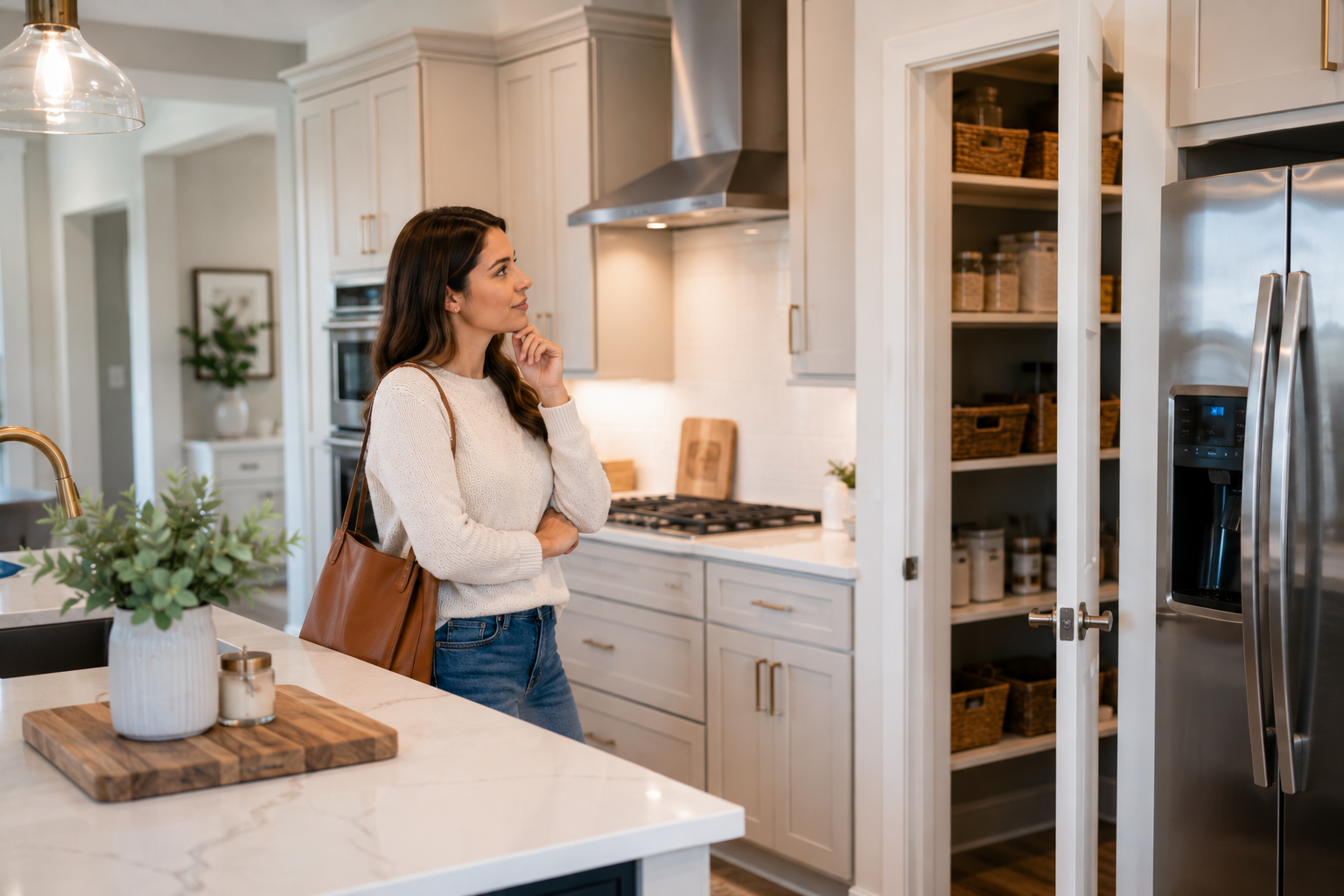
A first-time buyer was touring newer homes throughout Greenville after spending weeks researching communities online.
By that point, she had seen a lot of beautiful homes.
Beautiful kitchens.
Beautiful bathrooms.
Beautiful upgrades.
Everything was beginning to blend together.
Then she walked into a newer home in a builder community she hadn't originally considered.
The home was attractive.
The finishes were nice.
The layout felt modern.
But nothing immediately stood out as dramatically different.
As she continued walking through the home, however, she started noticing small details.
The pantry was located exactly where it needed to be.
The laundry room connected naturally to the primary suite.
The storage felt intentional.
The living spaces flowed comfortably together.
Natural light filled the home.
The overall layout felt easy.
She stopped in the kitchen and quietly looked around.
Then she smiled and said:
"I don't know why, but this one just feels right."
It was an honest reaction.
She wasn't talking about countertops.
She wasn't talking about upgrades.
She wasn't talking about square footage.
She was talking about comfort.
For the first time, she wasn't evaluating features.
She was imagining life.
Making dinner.
Relaxing after work.
Hosting family.
Living there.
That's often when emotional connection begins.
Not because a home is impressive.
Because it feels supportive.
What Can Help
If you find yourself emotionally attached to certain homes during tours, it can help to understand what you're actually responding to.
Pay Attention to How the Home Feels
Ask yourself:
• Does the layout feel natural?
• Can I imagine everyday routines here?
• Does the home feel comfortable?
• Does it feel stressful or calming?
• Could I see myself living here?
The answers often reveal more than buyers expect.
Look Beyond Individual Features
Beautiful kitchens matter.
Natural light matters.
Attractive finishes matter.
Thoughtful design matters.
The goal isn't ignoring those emotional reactions.
The goal is understanding why they're happening.
Many buyers discover they're responding to how all the pieces work together.
Evaluate Daily Functionality
Think about:
• storage
• kitchen flow
• laundry room placement
• outdoor living
• flexible spaces
• parking
• organization
• future usability
Functionality often shapes comfort more than buyers initially realize.
Imagine Ordinary Days
Many buyers naturally picture move-in day.
It can also help to imagine:
• weekday mornings
• grocery trips
• laundry
• cooking dinner
• relaxing after work
• spending weekends at home
The strongest floorplans often support these moments naturally.
Enjoy the beauty.
Understand the lifestyle.
Appreciate the finishes.
Evaluate the functionality.
The best home-buying decisions often balance all four.
As buyers begin connecting emotionally with a home, they often start imagining everyday moments happening inside it. Open living spaces can make those possibilities feel even more real. Learn more in:
Common Things That Trip Buyers Up
• Assuming emotional reactions aren't important
• Focusing only on square footage
• Comparing upgrades instead of functionality
• Ignoring daily routines
• Looking only at appearance
• Trying to make a purely logical decision
• Forgetting to imagine life after move-in day
FAQ
Why do some homes feel more comfortable than others?
Many buyers find that thoughtful layouts, natural light, practical storage, and functional living spaces contribute to a stronger sense of comfort.
Should emotional reactions influence a home purchase?
Emotional reactions can provide valuable insight when balanced with practical evaluation and functionality.
Can two similar homes feel completely different?
Absolutely. Layout, lighting, flow, storage, and overall atmosphere can create very different experiences.
What should buyers focus on during home tours?
Many buyers find it helpful to evaluate both emotional comfort and practical functionality.
Final Thoughts
Many buyers emotionally connect to homes that feel comfortable and functional because those homes help them imagine a life that feels enjoyable.
Not perfect.
Not stress-free.
Simply enjoyable.
Beautiful homes naturally create excitement.
Inviting kitchens.
Natural light.
Thoughtful finishes.
Open-concept gathering spaces.
Welcoming outdoor living areas.
These features help buyers imagine a future they feel excited about.
They matter.
At the same time, functionality shapes everyday life.
The pantry you'll use every day.
The layout you'll walk through every morning.
The storage that keeps life organized.
The spaces that support your routines.
Those features often create a different kind of value.
Not excitement.
Comfort.
The strongest home-buying decisions usually balance both.
Beauty and practicality.
Emotion and logic.
Excitement and clarity.
When buyers understand how those elements work together, confidence often follows.
This article is for general informational purposes only.
Work With Charlene
Charlene Vandaele is a real estate agent with Fathom Realty in Greenville, South Carolina helping first-time home buyers navigate new construction and newer homes with clarity and confidence.
864-345-9076
Quick Recap
• Many buyers emotionally connect to homes that feel comfortable and functional
• Emotional attachment often comes from imagining everyday life
• Thoughtful layouts and practical functionality create comfort
• Beautiful design and daily usability should work together
• The strongest home-buying decisions balance excitement with long-term livability