
Why Do Buyers in Simpsonville, South Carolina Start Imagining Their Life Five Years From Now?
At First Glance
Many buyers in Simpsonville, South Carolina start imagining their life five years from now because buying a home feels different from almost any other purchase.
At first, buyers focus on what they need today.
The right layout.
The right neighborhood.
The right price range.
The right number of bedrooms.
Then something shifts.
They walk into a home they genuinely love and suddenly begin imagining what life could look like years from now.
For many first-time buyers, that's when the home-buying process becomes much more emotional.
Why This Matters
One thing many first-time buyers start noticing is that the moment a house starts feeling like a home, their thinking begins to change.
Instead of evaluating features, they begin imagining a future.
That future might include career changes.
Growing families.
New hobbies.
Working from home.
Pets.
Lifestyle changes.
Or simply becoming more settled and comfortable.
Something that can surprise buyers is how quickly those thoughts appear.
A buyer may walk into a newer home and immediately notice the beautiful kitchen.
The large island feels welcoming.
The open-concept layout feels comfortable.
The large windows create beautiful natural light throughout the day.
The finishes feel fresh and inviting.
The outdoor living space feels relaxing.
The primary suite feels peaceful.
These reactions matter.
Beautiful homes are exciting.
They should be.
But during tours of newer homes, builder communities, and newer resale properties throughout Simpsonville, buyers often begin imagining something bigger than the home itself.
They begin imagining life.
How will mornings feel here?
How will holidays feel here?
Will this home still fit us later?
Can we grow into this space?
How will this home support everyday life?
A lot of buyers discover that emotional attachment often begins when they stop seeing a property as a house and start seeing it as a future.
That's one reason newer homes often create such strong emotional connections.
Many modern floor plans are intentionally designed to support evolving lifestyles.
Flexible spaces.
Open gathering areas.
Thoughtful storage.
Functional kitchens.
Outdoor living spaces.
Multi-purpose rooms.
These features allow buyers to imagine possibilities rather than limitations.
A Real Moment During the Buying Process
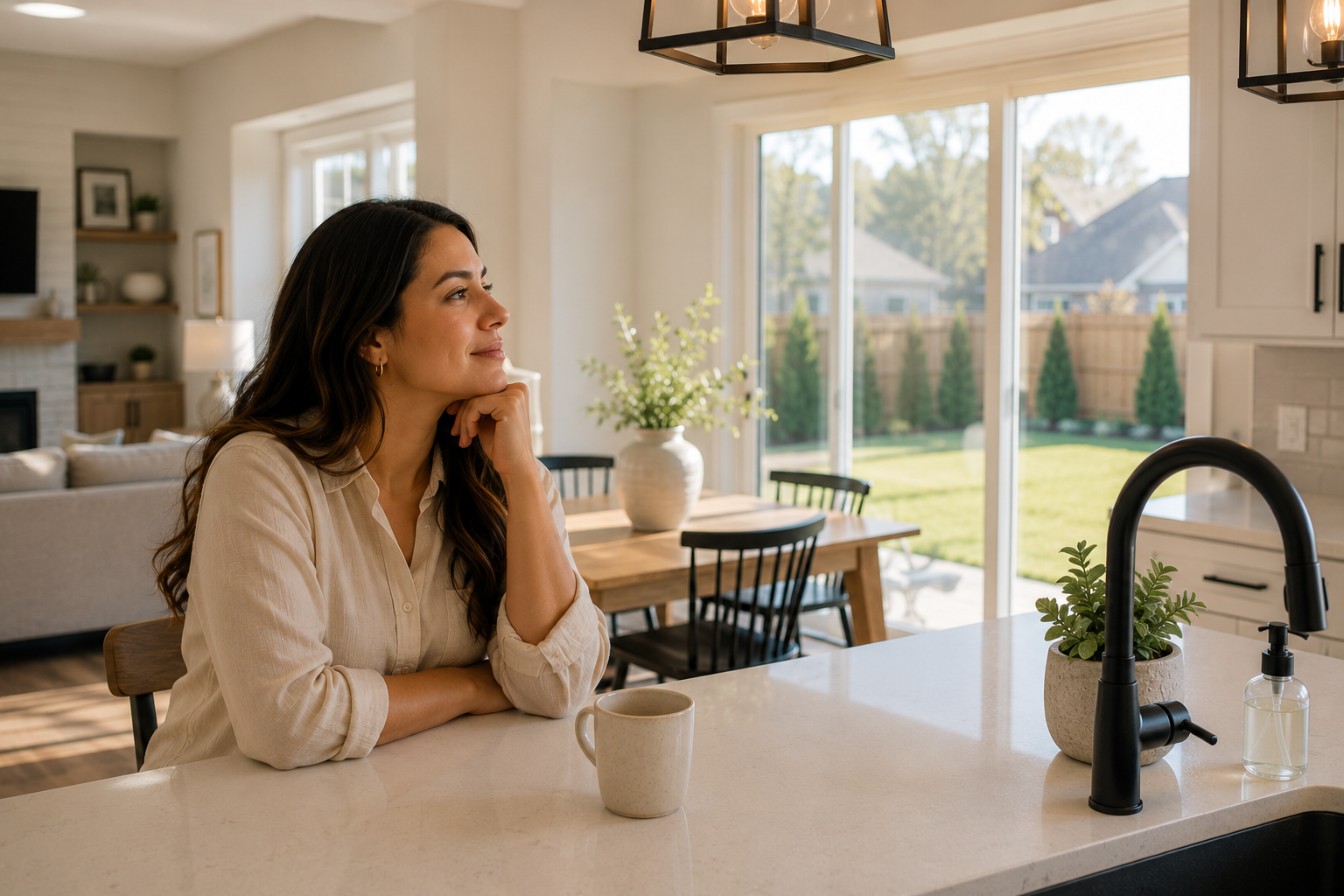
A buyer touring newer homes in Simpsonville thought she was simply comparing floor plans.
That was her goal.
Find the best layout.
Find the best community.
Find the best value.
The process felt logical.
Until one particular home changed everything.
The kitchen immediately caught her attention.
The gathering area felt bright and welcoming.
Natural light filled the living spaces.
The outdoor patio connected naturally to the backyard.
The home felt comfortable.
As she walked through the property, she paused inside a flex room near the front of the house.
At first she wasn't sure why.
Then she smiled.
A few moments later she said:
"I can actually picture us here a few years from now."
That statement surprised her.
She wasn't talking about the room.
She wasn't talking about the finishes.
She wasn't even talking about the floor plan.
She was imagining her life.
Working from home.
Hosting family.
Enjoying weekends.
Creating routines.
Building memories.
For the first time, she wasn't evaluating a property.
She was imagining a future.
That's often when emotional connection becomes stronger.
What Can Help
If you find yourself imagining life five years from now during home tours, that's completely normal.
It can help to approach those thoughts with curiosity instead of pressure.
Focus on Flexibility
Many buyers don't know exactly what their future will look like.
That's okay.
Instead of predicting every life change, ask:
• Can this home adapt?
• Does the layout offer flexibility?
• Are there spaces that can serve multiple purposes?
Adaptability often creates confidence.
Think About Everyday Living
Beautiful homes naturally attract attention.
But it can also help to ask:
• How will this kitchen function daily?
• Is there enough storage?
• Does the layout support routines?
• Will this home feel comfortable long term?
Functionality often shapes satisfaction more than buyers initially realize.
Imagine Lifestyle, Not Specific Events
Many buyers feel pressure to predict everything.
It can help to focus on broader questions:
• How do I want life to feel?
• What routines matter most?
• What type of environment supports my goals?
These questions are often easier to answer.
Pay Attention to Emotional Comfort
Some homes simply feel easier to imagine living in.
That reaction doesn't guarantee it's the right home.
But it can provide useful insight.
Enjoy the beauty.
Understand the lifestyle.
Appreciate the finishes.
Evaluate the functionality.
The strongest decisions often balance all four.
When buyers begin imagining life five years into the future, many discover that the real question isn't simply where they'll live. They start thinking more deeply about the kind of life they want their home to support and how their daily routines will feel after move-in day.
Common Things That Trip Buyers Up
• Trying to predict every future life change
• Assuming bigger homes automatically provide more flexibility
• Focusing only on cosmetic upgrades
• Ignoring everyday functionality
• Looking for certainty instead of adaptability
• Comparing homes without considering lifestyle
• Putting pressure on themselves to make a perfect decision
FAQ
Why do buyers start imagining their future during home tours?
Many buyers begin imagining future routines and experiences once a home feels emotionally comfortable and functional.
Do newer homes make it easier to imagine the future?
Many newer homes include flexible layouts, modern functionality, and adaptable spaces that support changing lifestyles.
Should I focus on future needs or current needs?
Most buyers benefit from balancing both. A home should work well today while offering flexibility for tomorrow.
Is it normal to become emotionally attached during a home search?
Yes. Buying a home is often both a practical and emotional experience.
Final Thoughts
Many buyers in Simpsonville start imagining their life five years from now because a home represents more than a place to live.
It represents possibility.
Beautiful kitchens.
Natural light.
Thoughtful layouts.
Flexible spaces.
Welcoming outdoor living areas.
These features create excitement because buyers can picture themselves enjoying them.
But emotional attachment often grows when buyers begin imagining life itself.
Future routines.
Future memories.
Future comfort.
The goal isn't finding a home that perfectly predicts every life change.
The goal is finding a home that feels capable of growing alongside you.
When buyers balance beautiful design with functionality and flexibility, they often discover the confidence they've been searching for.
This article is for general informational purposes only.
Work With Charlene
Charlene Vandaele is a real estate agent with Fathom Realty in Greenville, South Carolina helping first-time home buyers navigate new construction and newer homes with clarity and confidence.
864-345-9076
Quick Recap
• Many buyers start imagining life five years from now once a home feels emotionally comfortable
• Newer homes often create excitement through beauty and flexibility
• Future readiness is often about adaptability, not prediction
• Functionality and emotional comfort work together
• The best homes support both today's needs and tomorrow's possibilities