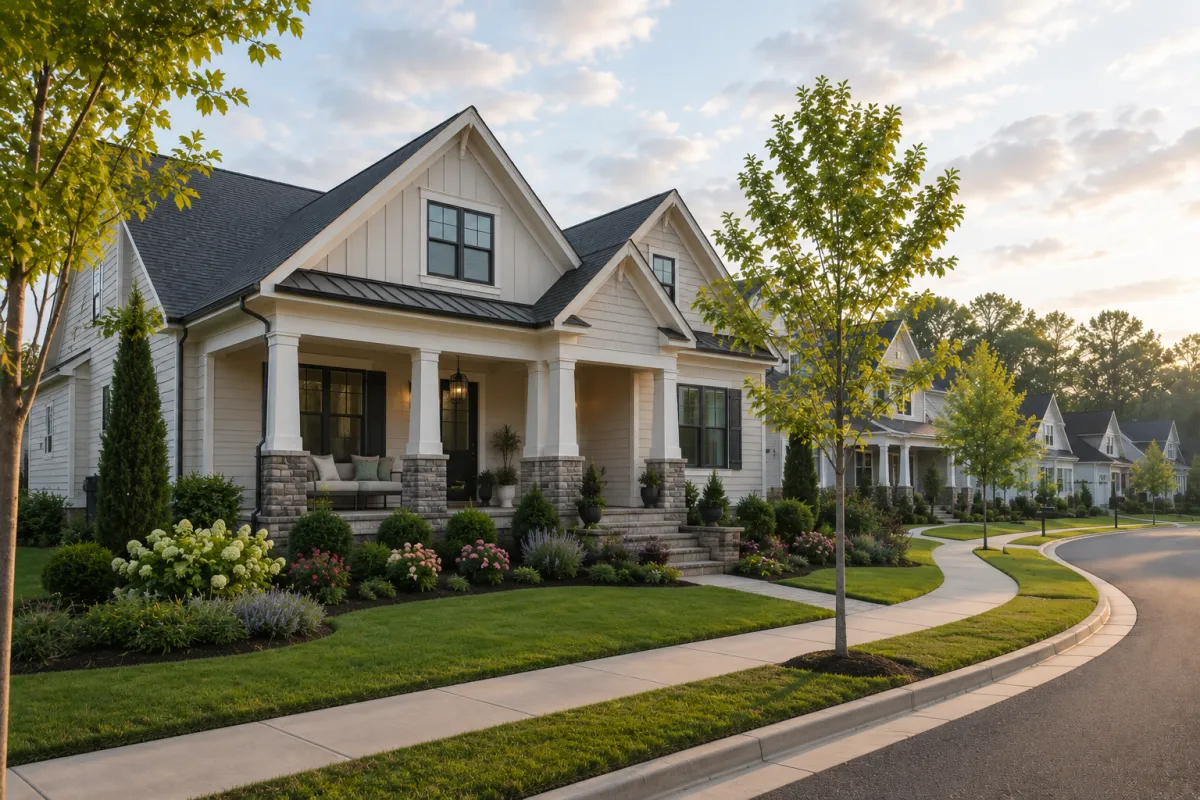
Why Do Buyers in Greenville, South Carolina Emotionally Connect to Homes With Better Traffic Flow?
At First Glance
Many buyers in Greenville, South Carolina emotionally connect to homes with better traffic flow because those homes simply feel easier to live in.
They feel comfortable.
They feel natural.
They feel welcoming.
At first, buyers often think they're reacting to the beautiful kitchen, the attractive finishes, or the large windows creating beautiful natural light throughout the day.
And those things absolutely matter.
Beautiful design is part of what makes a home exciting.
But sometimes the deeper emotional connection comes from something buyers can't immediately identify.
The home just feels right.
Often, traffic flow is a big reason why.
Why This Matters
One thing many first-time buyers start noticing is that two homes can have very similar square footage and completely different feelings.
One home feels effortless.
The other feels awkward.
One feels open and inviting.
The other feels cramped despite being the same size.
Something that can surprise buyers is that traffic flow often creates that difference.
Traffic flow simply refers to how people naturally move through the home.
Can you move easily from the garage to the kitchen?
Does the kitchen connect naturally to the living space?
Can family members move through the home without constantly crossing paths?
Do gathering areas feel connected without feeling crowded?
Many newer homes and builder communities throughout Greenville are intentionally designed with these considerations in mind.
Builders understand that functionality shapes daily life.
The kitchen may be beautiful, but buyers may also want to consider how the layout supports cooking and entertaining.
The open-concept gathering spaces feel inviting because movement feels natural.
The primary suite often feels relaxing because it provides separation from busier parts of the home.
The outdoor living area feels welcoming because it connects easily to indoor spaces.
These details may seem small.
But they influence how a home feels every day.
That's why buyers sometimes become emotionally attached to a home before they can explain exactly why.
The home supports movement.
The home supports routines.
The home supports life.
And that often creates comfort.
A Real Moment During the Buying Process
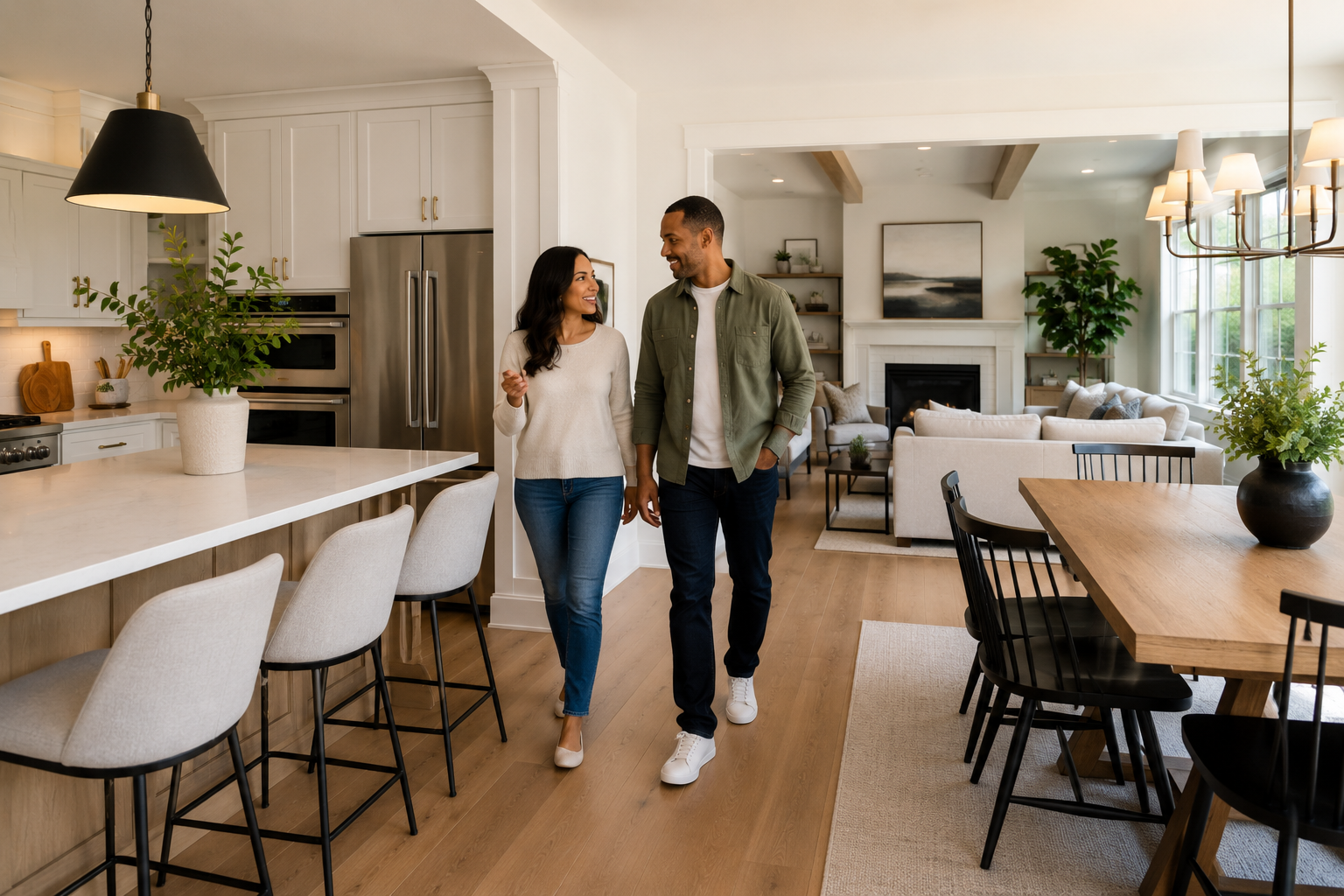
Imagine a first-time buyer touring two newer homes in Greenville.
Both homes have attractive finishes.
Both have beautiful kitchens.
Both have open-concept layouts.
Both fit the budget.
On paper, they appear very similar.
In the first home, the layout feels slightly awkward.
Walking from the garage to the kitchen requires navigating around furniture placement.
The pantry feels disconnected from the workspace.
The traffic path cuts directly through the main gathering area.
Nothing feels terrible.
But something feels slightly off.
Then she tours the second home.
The kitchen flows naturally from the garage entry.
The island feels positioned exactly where it should be.
The dining area connects comfortably to the living room.
Movement throughout the home feels easy.
Without even realizing it, she relaxes.
As she walks through the home, she begins imagining everyday life.
Bringing in groceries.
Hosting family.
Preparing meals.
Relaxing after work.
Everything feels easier.
A few moments later she says:
"I don't know why, but this home just feels better."
That's often how emotional attachment begins.
Not because buyers are evaluating floor plan diagrams.
Because they're experiencing how the home feels to live in.
What Can Help
When evaluating traffic flow, it can help to focus less on room size and more on how the spaces work together.
Some helpful questions include:
* How do we enter and leave the home most often?
* Does the kitchen connect naturally to daily routines?
* Can multiple people move through the space comfortably?
* Does the layout support entertaining?
* Are gathering areas easy to navigate?
* How does the home feel when imagining a typical weekday?
* Does the outdoor living area feel connected?
* Can furniture be arranged without creating obstacles?
Many buyers find themselves appreciating features such as:
* Open-concept living areas
* Well-positioned kitchen islands
* Walk-in pantries near workspaces
* Functional garage entry points
* Split-bedroom layouts
* Flexible gathering spaces
* Covered outdoor living areas
* Practical storage locations
A lot of buyers begin realizing that traffic flow isn't really about movement.
It's about convenience.
It's about comfort.
It's about reducing friction in daily life.
The beautiful finishes create excitement.
The thoughtful layout creates long-term satisfaction.
The strongest homes often provide both.
Enjoy the beauty.
Understand the lifestyle.
Appreciate the finishes.
Evaluate the functionality.
As buyers begin appreciating layouts that feel comfortable and easy to navigate, they often start imagining how those spaces could improve everyday routines, especially during busy weekday mornings.
Common Things That Trip Buyers Up
* Focusing only on square footage
* Looking only at finishes
* Ignoring everyday routines
* Evaluating rooms individually instead of as a system
* Forgetting about furniture placement
* Overlooking garage-to-kitchen access
* Ignoring outdoor living connections
* Assuming bigger automatically means better
* Comparing homes only on paper
* Underestimating how movement affects comfort
FAQ
What is traffic flow in a home?
Traffic flow refers to how people naturally move between rooms and spaces throughout the home.
Why does traffic flow matter?
Good traffic flow often makes daily routines easier and helps a home feel more comfortable and functional.
Can traffic flow affect emotional connection?
Yes. Many buyers emotionally connect to homes that feel easy and comfortable to move through.
Do newer homes usually have better traffic flow?
Many newer homes are intentionally designed around modern living patterns and often include thoughtful traffic flow considerations.
Final Thoughts
One of the most interesting things about the home-buying process is realizing that emotional attachment doesn't always come from the features buyers expect.
The beautiful kitchen matters.
The attractive finishes matter.
The natural light matters.
The spa-like bathrooms matter.
Those things create excitement.
But sometimes emotional comfort comes from something less obvious.
The way the home works.
The way movement feels natural.
The way daily routines seem easier.
That's often what traffic flow provides.
Not just functionality.
Comfort.
Confidence.
Ease.
The strongest home-buying decisions often balance beauty and practicality.
Emotion and logic.
Excitement and clarity.
A home with good traffic flow may not be the first feature buyers notice.
But it is often one of the reasons a home feels right.
This article is for general informational purposes only.
Work With Charlene
Charlene Vandaele is a real estate agent with Fathom Realty in Greenville, South Carolina helping first-time home buyers navigate new construction and newer homes with clarity and confidence.
864-345-9076
Quick Recap
* Buyers often emotionally connect to homes with better traffic flow.
* Thoughtful layouts can make everyday life feel easier.
* Traffic flow influences comfort, convenience, and functionality.
* Newer homes are often designed with modern living patterns in mind.
* Beautiful design and practical living work best together.
* The strongest decisions balance emotional connection and everyday usability.