
Why Do Buyers in Greenville, South Carolina Emotionally Connect to Homes That Feel Like Smart Long-Term Choices?
At First Glance
Many buyers in Greenville, South Carolina emotionally connect to homes that feel like smart long-term choices because those homes often provide something deeper than excitement.
They provide reassurance.
As buyers move through the home search process, they often start looking for more than beautiful finishes and attractive design features. They begin looking for confidence.
They want to feel like they're making a decision that will support both their life today and their future tomorrow.
That emotional connection can be surprisingly powerful.
Why This Matters
The home-buying journey often starts with uncertainty.
Buyers worry about making mistakes.
They worry about spending too much money.
They worry about choosing the wrong neighborhood, the wrong floor plan, or the wrong home altogether.
As the search continues, many buyers begin evaluating homes differently.
Instead of asking only, "Do I like this house?"
They start asking:
"Will this home still work for me a few years from now?"
"Will I regret this decision later?"
"Can I see myself growing here?"
Those questions create a different kind of emotional response.
One thing many first-time buyers start noticing is that homes with thoughtful functionality often create a feeling of calm.
The home may have a beautiful kitchen with attractive finishes.
The large windows may fill the living room with natural light.
The open-concept layout may feel welcoming and comfortable.
But beyond those visual features, something else is happening.
The home feels practical.
The storage makes sense.
The traffic flow feels natural.
The spaces seem flexible.
The layout appears capable of adapting as life changes.
That combination of beauty and functionality often creates emotional confidence.
Buyers don't just see a house.
They begin seeing a future.
A Real Moment During the Buying Process
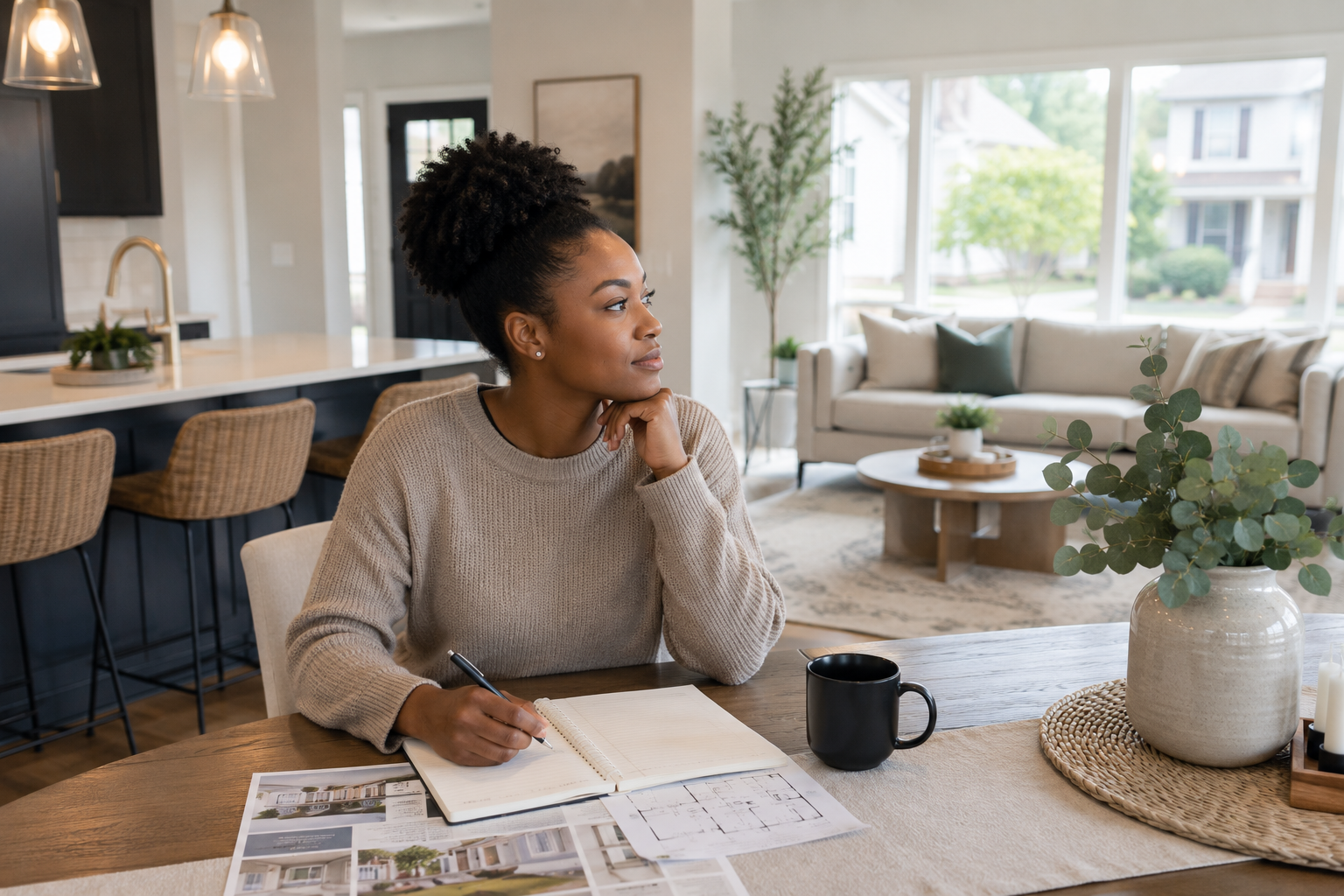
A buyer touring newer homes in Greenville found herself drawn to one particular property almost immediately.
At first, she assumed it was because the home was beautiful.
The kitchen featured modern cabinetry and a large island.
The natural light throughout the home felt warm and inviting.
The primary suite felt comfortable and relaxing.
But as she continued walking through the home, she started paying attention to different details.
The flex room near the front of the house could become an office.
The extra storage areas seemed genuinely useful.
The laundry room was conveniently located.
The outdoor living space felt manageable rather than overwhelming.
Eventually she stopped in the family room and quietly said:
"I think this house just makes sense."
What she was feeling wasn't only excitement.
It was relief.
The home felt like it could support everyday life.
She wasn't imagining move-in day anymore.
She was imagining normal Tuesday mornings.
Workdays.
Weekends.
Future routines.
Many buyers discover that this is the moment emotional attachment begins to feel different.
Instead of falling in love with a house because it looks impressive, they start connecting to a home because it feels sustainable.
What Can Help
If you're trying to understand why certain homes feel more reassuring than others, it can help to focus on the qualities that often create long-term confidence.
Look for Flexible Spaces
Life changes.
Many buyers appreciate homes that offer flexibility.
Consider spaces that could serve multiple purposes over time.
A flex room, loft, bonus room, or additional bedroom may support future needs.
Pay Attention to Everyday Functionality
Beautiful design matters.
Functionality matters too.
Ask yourself:
• Does the kitchen support daily routines?
• Is there enough storage?
• Does the layout feel comfortable?
• Can the home adapt if your needs change?
Notice How the Home Makes You Feel
Sometimes buyers try to ignore emotional reactions.
That usually isn't necessary.
Emotional connection is an important part of the process.
Instead of dismissing that feeling, explore why it exists.
Is it the natural light?
The layout?
The comfort?
The practicality?
The answer often reveals valuable information.
Think Beyond Move-In Day
A lot of buyers begin realizing that long-term confidence comes from imagining everyday life rather than focusing solely on closing day.
The question isn't simply:
"Do I love this house?"
It's also:
"Will this home support everyday life?"
As buyers become more confident about what makes a home feel like a strong long-term decision, they often notice something unexpected during tours. They start evaluating the home through the eyes of future buyers as well as their own.
Common Things That Trip Buyers Up
• Assuming emotional connection means they are being irrational
• Focusing only on finishes and upgrades
• Ignoring functionality because a home looks beautiful
• Trying to remove emotion completely from the decision
• Overthinking future scenarios that may never happen
• Confusing excitement with long-term confidence
• Forgetting to evaluate how daily life will feel after move-in
Is it normal to become emotionally attached to a home?
Yes. Buying a home is both a practical and emotional decision. Many buyers naturally develop emotional connections during the search process.
Why do some homes feel more reassuring than others?
Often it's a combination of functionality, layout, comfort, natural light, flexibility, and the ability to imagine everyday life there.
Should I trust my emotional reaction to a home?
Emotional reactions can provide useful information. The goal is simply to balance those feelings with practical evaluation.
Can a beautiful home also be a smart long-term choice?
Absolutely. Many newer homes combine attractive design features with functionality that supports daily living and future flexibility.
Final Thoughts
Many buyers in Greenville emotionally connect to homes that feel like smart long-term choices because those homes offer more than visual appeal.
They offer peace of mind.
The homes that often create the strongest connections are not always the most dramatic or impressive.
They're frequently the homes that balance beauty and practicality.
The homes that support routines.
The homes that feel flexible.
The homes that make buyers feel comfortable imagining the future.
When a home helps you picture everyday life with confidence, that emotional connection may be telling you something important.
This article is for general informational purposes only.
Work With Charlene
Charlene Vandaele is a real estate agent with Fathom Realty in Greenville, South Carolina helping first-time home buyers navigate new construction and newer homes with clarity and confidence.
864-345-9076
Quick Recap
• Buyers often connect emotionally to homes that feel practical and future-focused
• Functionality frequently creates confidence
• Beautiful design and long-term usability can work together
• Emotional attachment is a normal part of the buying process
• The best homes often support both current routines and future flexibility