
Why Do Buyers in Greenville, South Carolina Emotionally Connect to Homes That Feel Convenient to Live In?
At First Glance
Many buyers in Greenville, South Carolina emotionally connect to homes that feel convenient to live in because convenience often creates comfort.
At first, buyers may think they're falling in love with beautiful finishes, natural light, or attractive design features.
Those things certainly matter.
But as buyers spend more time touring homes, many begin realizing that convenience plays a surprisingly important role in emotional connection.
A home that feels easy to live in often feels good to live in.
And that feeling can be powerful.
Why This Matters
When people imagine falling in love with a home, they often picture emotional moments.
A beautiful kitchen.
A welcoming front porch.
Large windows filling the home with natural light.
An open-concept living area that feels bright and inviting.
Those details absolutely contribute to a home's appeal.
But something else is happening at the same time.
Buyers are quietly imagining everyday life.
Without necessarily realizing it, they're asking questions like:
* Will mornings feel easier here?
* Can I see myself cooking in this kitchen?
* Is there enough storage?
* Will groceries be easy to carry inside?
* Does this layout feel comfortable?
* Can I relax here?
* Will this home support my routine?
Many buyers don't emotionally connect to convenience because they're thinking about convenience.
They connect because convenience often reduces stress.
A home that works well tends to feel peaceful.
And peace creates emotional attachment.
This is especially true in newer homes and builder communities around Greenville, where thoughtful floor plans, practical storage, open living areas, and functional layouts are often part of the design.
The beauty attracts attention.
The functionality often creates long-term satisfaction.
A Real Moment During the Buying Process
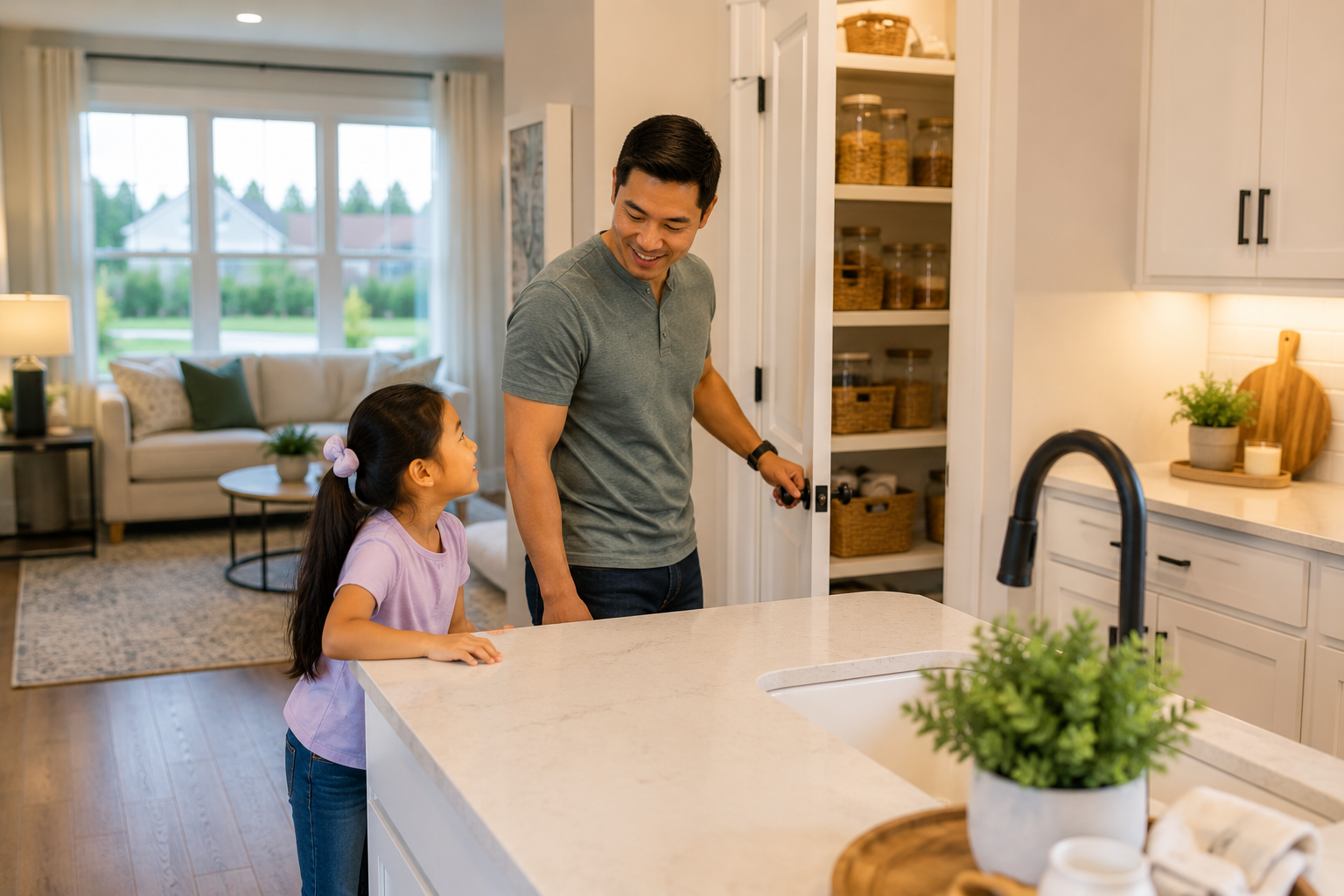
Imagine a first-time buyer touring several new construction homes in Greenville.
She has already seen beautiful kitchens.
Beautiful bathrooms.
Attractive finishes.
Large windows.
Modern layouts.
Each home looks impressive.
Then she walks into one particular home.
Nothing seems dramatically different at first.
The finishes are attractive.
The natural light feels warm.
The kitchen is beautiful.
But something feels different.
As she walks through the house, she notices small details.
The laundry room is located where it makes sense.
The pantry is easy to access.
The garage entry feels practical.
The storage spaces seem useful.
The flow between rooms feels natural.
A few minutes later she turns and says:
"I don't know why, but this one just feels easier."
That moment isn't unusual.
Sometimes emotional connection develops because buyers can imagine life unfolding comfortably inside the home.
Convenience often creates confidence.
And confidence creates attachment.
What Can Help
When touring homes, it can help to pay attention to both emotional reactions and practical observations.
Many buyers naturally notice:
* Beautiful kitchens
* Attractive finishes
* Natural light
* Outdoor living spaces
* Thoughtful design details
* Spacious bathrooms
Those things matter.
At the same time, it can be helpful to ask:
* Is the storage practical?
* Does the kitchen workflow make sense?
* How far is the laundry room?
* Is there enough space for daily routines?
* Will this layout support future needs?
* Does the home feel comfortable to navigate?
Sometimes buyers are surprised by which details ultimately matter most.
A beautiful kitchen may create excitement.
A functional pantry may make life easier every day.
A spacious living room may feel inviting.
A practical floor plan may reduce frustration for years.
The goal isn't choosing beauty or functionality.
The goal is appreciating both.
Enjoy the beauty.
Understand the lifestyle.
Once buyers begin emotionally connecting to a home's convenience, they often start imagining something even bigger. They picture everyday life unfolding inside the space and how thoughtful design can reduce stress, simplify routines, and make daily living feel more comfortable.
Common Things That Trip Buyers Up
* Focusing only on visual appeal
* Ignoring daily routines during tours
* Overlooking storage functionality
* Assuming all floor plans feel the same
* Comparing homes only by square footage
* Forgetting to think about future needs
* Rushing through walkthroughs
* Letting upgrade features overshadow functionality
* Confusing excitement with long-term comfort
* Ignoring how a home actually feels to live in
FAQ
Why do buyers become emotionally attached to certain homes?
Often because they can imagine daily life unfolding comfortably and naturally inside the space.
Does convenience really influence emotional connection?
For many buyers, yes. A home that supports everyday routines often feels more comfortable and less stressful.
Should buyers focus on beauty or functionality?
Most buyers benefit from considering both. Beautiful design creates excitement, while functionality supports long-term satisfaction.
Can a floor plan affect how a home feels emotionally?
Absolutely. Layout, flow, storage, and convenience can influence how comfortable a home feels to live in.
Final Thoughts
Emotional connection isn't always about dramatic features or luxury upgrades.
Sometimes it's about something much simpler.
A home feels comfortable.
A layout makes sense.
The space supports everyday routines.
Life feels easier to imagine.
Beautiful design is important.
Natural light matters.
Thoughtful finishes can create excitement.
But functionality often shapes how a home feels after move-in day.
That's why so many buyers find themselves emotionally drawn to homes that simply feel easy to live in.
This article is for general informational purposes only.
Work With Charlene
Charlene Vandaele is a real estate agent with Fathom Realty in Greenville, South Carolina helping first-time home buyers navigate new construction and newer homes with clarity and confidence.
864-345-9076
Quick Recap
* Buyers often emotionally connect to homes that feel convenient.
* Convenience can reduce stress and create comfort.
* Beautiful design and functionality both matter.
* Floor plans, storage, and layout influence everyday life.
* Emotional attachment often develops when buyers can imagine comfortable routines.
* The strongest home decisions balance beauty and practicality.